Bai Li's Dream - Reviews

Bai Li's Dream
+Add to Custom List
Sort
Add review
... Read More
I'm giving this novel 2 stars, primarily because I wish I had made the decision to drop it earlier in the reading journey. The story starts off with a captivating premise that hooked me instantly, and I must admit that the ending, while decent, didn't quite redeem the experience overall. Unfortunately, the latter half of the book—especially the final 150 chapters—lost a great deal of coherence, and I found myself increasingly frustrated by the direction the plot took. The initial concept of dream-walking, which held so much potential for exploration and creativity, seemed to fade into the background as the narrative shifted focus toward political and palace intrigue. This shift ultimately left the story feeling disjointed and meandering. Moreover, the introduction of an annoying love triangle filled with overly emotional male leads (MLs) and a rather unsavory main character (MC) contributed to my dissatisfaction. As the characters progressed through the story, they became less relatable and, frankly, rather unlikeable. Among the cast, only the first male lead and his mother, Madam Dongyang, truly stood out as characters worth rooting for. However, even I found the first ML's behavior increasingly grating as the story unfolded. Despite my initial enthusiasm for the characters and plot, what began as an intriguing journey unraveled into a tedious slog, marred by frustrating relationship dynamics and a convoluted storyline. Overall, while the novel had its moments and showed glimpses of brilliance, it ultimately fell short of its promising beginnings.
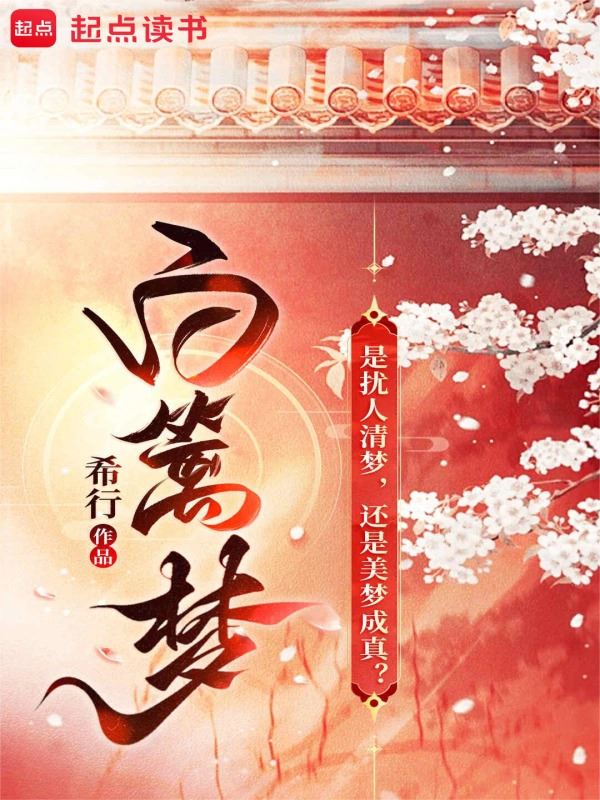
... Read More
Overall, the opening chapters do exactly what a good historical romance should: establish a compelling mystery, introduce layered characters, and paint a vivid world. I'm not sure if this is going to focus on domestic life or political schemes, but either way, I'm hooked on finding out why Zhou Jingyun married Zhuang Li and what secrets she carries.
... Read More
The line "Reading ten thousand books, traveling ten thousand miles" is used to describe Jingyun from his mother's perspective. It frames him as wise not just from study but from experience. The fact that he returned from the hardship of remote postings made him "mature and reliable," which sets up his reappearance in court as a major event.
... Read More
I appreciate that Madam Dongyang isn't a villain. She's disappointed and picks up on the oddness of the situation, but she decides to accept her son's decision. She even mentions earlier that she never pressured him to remarry. That shows a supportive mother. The drama won't come from her being a wicked mother-in-law, which is refreshing.
... Read More
Zhuang Li's first night in the courtyard is left open-ended. After bathing, she just sits there. No dramatic confrontation, no tears, no scheming. She's simply in a new place, surrounded by strangers. That quietness is poignant. It makes me want to know how she'll start carving a place for herself.
... Read More
The pacing between scenes is quick but not rushed. From the banquet to the mansion, to the receiving of the daughter-in-law, to the private discussion with Mama Xu—each beat gives just enough exposition. The author doesn't info-dump; she weaves the past into present dialogue naturally.
... Read More
The conversation where Madam Dongyang says she doesn't need to marry off her son to a prominent family because they don't rely on in-laws is a breath of fresh air. Too many historical stories force noble marriages for status. This family has the confidence to marry for character. That aligns with Jingyun's choice.
... Read More
The treatment of the concubines and servants shows a family with clear hierarchy but not cruelty. Madam Dongyang doesn't yell or punish. She just handles things pragmatically. The concubines and their children bow and leave quietly. It's a well-run house with understated dignity, which makes the intrusion of Zhuang Li more jarring.
... Read More
I love how Mama Xu and Madam Dongyang have a history of loyalty. Mama Xu seems more like a friend than a servant, defending the family's humble roots and boasting they survived while others fell. That kind of servant-mistress bond builds the realism of the household. She also softens Madam Dongyang's harsh moments.
... Read More
The little sister asking for a gift is one of those realistic details that makes the world feel alive. She's just a kid saying what she thinks, and it shatters the awkward politeness. Madam Dongyang quickly redirects, but the damage is done: Zhuang Li is officially the one who showed up empty-handed. It's a small humiliation, but its palpable.
... Read More
The contrast between the first wife (a duke's daughter) and Zhuang Li (a teacher's orphan) is enormous. That's a deliberate shift, and it tells me Jingyun changed his priorities. He no longer wants a high-born alliance; he wants someone unaffiliated. That might be purely political, but maybe he also wants a real connection without noble scheming.
... Read More
The moment when Madam Dongyang says, "It's easier to be a good person now? It's become a crime to be a good person," she recites a Buddhist prayer. That line carries the weight of the family's philosophy: stay humble, survive the purges. The Marquis family has outlasted others by being low-key. This mindset obviously influenced Jingyun's decisions, including his marriage.

Leave a comment

You must be logged in to leave comments. or