Rebirth Era: Bringing Resources And Space To Farm And Get Rich - Reviews

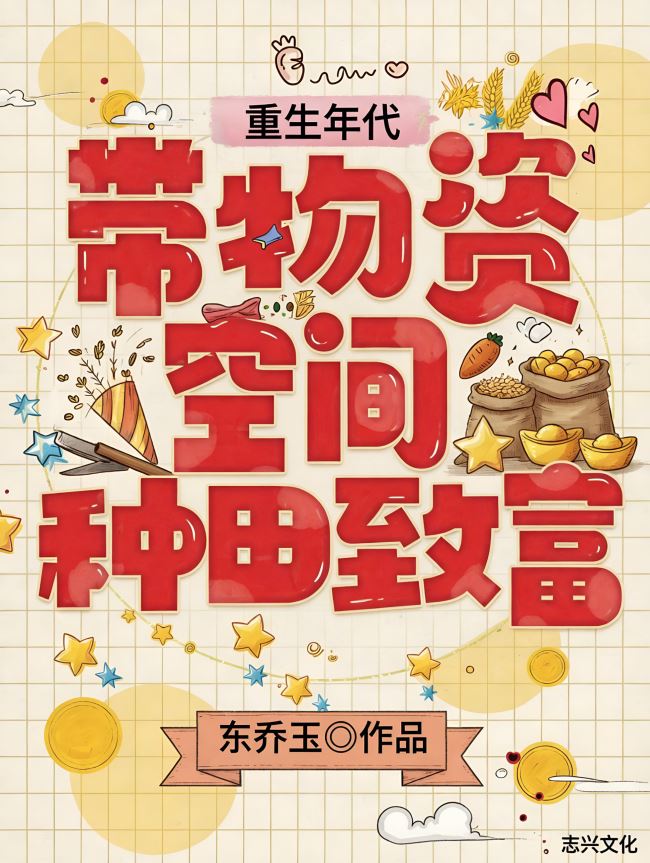
Rebirth Era: Bringing Resources And Space To Farm And Get Rich
+Add to Custom List
Sort
Add review
... Read More
Overall, the story is a fast, fun read with a compelling protagonist and good set pieces. It’s not deep, but it doesn’t pretend to be. The character motivations are clear, the action is satisfying, and the space element adds a fun twist to the transmigration genre. The weaknesses are mainly in the flat antagonist, some overly convenient plot devices, and a lack of period atmosphere. But if you’re looking for a comfort read with a strong female lead who kicks ass and takes names, this delivers. I finished the sample wanting to know what happens next—whether Rong Yan will outsmart Gu Lan’s schemes and how she’ll handle the inevitable village rumor mill. That curiosity is the sign of a successful hook.
... Read More
The part where Rong Yan lifts Qin Ye onto her back and carries him down the mountain, despite her body being weak, is a defining character moment. It shows her willpower and physical commitment. But it also raises a small logic issue: Would the villagers notice a woman carrying a grown man through the village at night? The story doesn’t address that. It feels like they’re ghosting through a deserted landscape. A little bit of local color—a neighbor peeking out, a barking dog—would have made the scene feel more alive. Still, the intimacy of that scene—her breathing hard, him silent with shame—is emotionally effective.
... Read More
The “golden finger is too powerful, but I like it” line is pure wish-fulfillment and I love that the author is self-aware about it. Rong Yan literally acknowledges that her cheat is overpowered and just accepts it without guilt. That’s refreshing. In a lot of stories, the protagonist feels conflicted or guilty about their advantages, but here, she just enjoys it. It makes her feel more modern and empowered. It also aligns with the genre’s expectations—readers of transmigration stories want to see the protagonist thrive, not struggle with moral dilemmas over their gifts. This is escapism, and the author leans into it unapologetically.
... Read More
I really enjoyed the moment when Rong Yan slaps Gu Lan and says “I hit you because I thought you were a friend.” It’s such a cold, sarcastic line. She’s not even pretending to be diplomatic. It’s a declaration of war disguised as a rebuke. That kind of dialogue is punchy and memorable. I wish there were more lines like that—witty, cutting, and layered with meaning. Most of the dialogue is functional, moving the plot along, but this one line stands out. It shows that Rong Yan has a sharp tongue to match her sharp fists. That’s a good combination. I hope the author gives her more verbal sparring in the future.
... Read More
The setting—1978, Qin Family Village, back mountain, educated youths—is evocative but the historical details feel a bit thin. We get mentions of “Production Brigade” and “sent down to the countryside,” but the texture of daily life in that era is missing. Things like ration tickets, communal farming, political slogans—those are glossed over in favor of action and space mechanics. For me, that’s a missed opportunity for atmosphere. A few more specific period details would ground the fantasy in reality and make the contrast with her modern supermarket feel sharper. Right now, the 1978 setting is mostly a backdrop for tropes rather than a lived-in world.
... Read More
The “younger sister-in-law abducted and sold” detail is dropped casually, but it’s horrifying. Qin Mei is described as soft and timid, making her a perfect victim in that kind of plot. Knowing that fate is potentially coming raises the stakes for every scene she’s in. Rong Yan’s determination to prevent that adds urgency to her actions. I’m actually a little scared for Qin Mei now, even though logically I know Rong Yan will prevent it. That’s good writing—making me feel invested in the fate of a side character. The author planted that seed well. Now I’m watching every interaction with strangers for red flags.
... Read More
The way Rong Yan instantly shifts from fierce fighter to gentle caretaker is a bit jarring but in a good way. After breaking Gu Lan’s wrist and threatening her, she turns around and offers food to the kids with a “gentle” chuckle. That’s a whiplash-inducing contrast, and it makes her character feel unpredictable. I like unpredictable. It keeps me guessing about how she’ll react in any given situation. Is she going to be sweet or violent? Both? That ambiguity is compelling. I just hope the author maintains that balance and doesn’t lean too hard into one mode. Too much sweetness and she loses edge; too much violence and she becomes unlikable.
... Read More
The “fate in the book” exposition where Rong Yan remembers Qin Ye’s fate and the kids’ tragic futures feels like a classic motivation-setting scene. It works, but it’s a bit info-dumpy. She just stands there and thinks about how they’re all pawns for the female protagonist, and then swears to change their fate. I wish that realization had been woven more naturally into her interactions with them. Maybe when she sees Qin Mei’s skinny arms, she flashes to the abduction scene. Something more visceral. Still, I get why it’s there—it externalizes her internal drive for the reader. Without it, her motivation could seem shallow.
... Read More
The description of Qin Yu’s wariness is well-done. He’s not just scared of Rong Yan’s violence; he’s scared because he’s never had a reliable adult before. His suspicion that she might be trying to poison him with “good food” is darkly funny but also tragic. It shows the level of trauma and neglect these kids have experienced. I appreciate that the author doesn’t immediately resolve his trust issues. Even after Rong Yan brings Qin Ye home safely, Qin Yu is still hesitant. That’s realistic. Trust takes time, especially for a child who’s been let down before. I hope this subplot is given room to develop slowly.
... Read More
Qin Ye’s sudden foot-stomp on Liu Er’s calf bone is brutal and unexpected. He just shows up, sees the situation, and without a word, he disables the man for life. That’s cold. It tells you everything about his protective instincts and his willingness to cross lines. It also subtly aligns him with Rong Yan in terms of ruthlessness. They’re both capable of extreme violence when someone they care about is threatened. This shared capacity for darkness could be a bonding point or a source of future conflict. I’m leaning toward bonding, because these two seem to understand each other’s actions without needing much explanation.
... Read More
I have mixed feelings about the “Supermarket” cheat. On one hand, it’s a massive deus ex machina that solves hunger, medicine, and resource problems instantly. It raises the question: why should we worry about any obstacle if she has infinite supplies? On the other hand, it’s a creative and fun way to give her a distinct advantage. The fact that it’s literally her own father’s supermarket from her past life adds an emotional layer—it’s a connection to her old world. That’s interesting. I hope the author introduces limitations later, like the space being detectable by others or the supplies running out, to reintroduce stakes.
... Read More
The translation itself is decent but has some awkward phrasing. Phrases like “the person collapsed on the ground with lecherous eyes” feel a bit stiff and literal. Also, “Your Grandmother” as a translation for a Chinese curse word like “nǐ zǔzōng” feels… off. It doesn’t land naturally in English. These are minor quibbles, but they do remind me I’m reading a translation, which breaks immersion. The author’s original voice probably has more flair in Chinese. That said, the dialogue is generally snappy and clear, and the action sequences are easy to follow. For a fan translation, it’s above average.

Leave a comment

You must be logged in to leave comments. or