Sewing Corpses, Suppressing Ghost Disasters - Reviews

Sewing Corpses, Suppressing Ghost Disasters
+Add to Custom List
Sort
Add review
... Read More
**Review: 5/5 from Chapters 1-120, but rapidly declines to a disheartening -1/5 by Chapter 600** I’m not entirely sure why this novel has received such low ratings. It presents a compelling narrative centered around a Chinese exorcist, where the protagonist, after a near-fatal encounter with a ghost, immerses himself in the art of exorcism and engages in battles against malevolent spirits. Initially, the story captures the quintessential elements of a classic ghost novel, which is quite promising. However, one significant drawback stands out: the author seems to lack a nuanced understanding of female characters. Throughout the tale, the main cast is entirely male, forming a tight-knit brotherhood of close male friends who embark on their adventurous quests together. Unfortunately, female characters are relegated to one of three unsatisfactory archetypes—they are either embodiments of evil, mere sexual objects, or simply spectral entities. While the author doesn’t render his female characters unintelligent, they nonetheless become mired in these repetitive and limiting roles. On the whole, the novel serves well as a ghost story. It is reasonably engaging, featuring a solid plot and commendable writing. The narrative is thrilling, primarily revolving around the protagonist’s narrow escapes from danger. However, it's essential to note that the intensity of the horror elements is somewhat subdued, leaving the frightening factor lacking for those seeking a gripping thrill. Additionally, a basic understanding of Eastern occultism would greatly enhance your reading experience, as the story delves into various esoteric practices prevalent in East and Southeast Asia. Many of the dark and sinister rituals depicted in the novel are rooted in real practices from that region, which adds a level of authenticity, albeit at times confounding for those unfamiliar with the context. Without this foundational knowledge, readers may find some elements of the story disorienting or unexplainably bizarre. In summary, this novel has the potential to be a standout ghost story, particularly in its earlier chapters. However, the decline in quality and depth as the narrative progresses is disappointing. It's a series that might be more fulfilling with the right expectations and background knowledge in Eastern occult traditions.
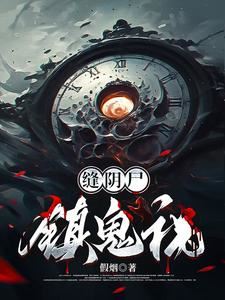
... Read More
Honestly, the biggest compliment I can give this story is that I forgot I was reading a translated work for most of it. The prose flows so naturally that I was just immersed in the world. The only time I remembered was when the specific cultural terms popped up, but they were explained well enough in context that it didn't break my immersion. The characters feel like real people in an impossible situation. The protagonist's deadpan narration is perfectly matched to his condition. Su Mingyang's overreaction is the perfect foil. The mystery of the stitched corpse and the ghost wedding is compelling. And the childhood flashback adds an emotional weight that makes the horror personal. It's a very well-constructed first chapter. It sets up the world, the rules, the characters, and the main conflict, all while telling a compelling self-contained segment of the story. Not many novels can do that in their opening pages. I am absolutely going to keep reading. This is some quality horror fiction.
... Read More
Overall, after reading the first 500KB of this, my interest is completely locked in. The protagonist's unique condition, the detailed corpse stitching lore, the tragic backstory with the little girl, and the terrifying escalation into a ghost wedding that has him as the groom. This is a story that knows exactly what it wants to be. It's dark, it's atmospheric, it's culturally rich, and it has a strong central hook. The writing is descriptive but not purple, the characters are distinct even if one of them is emotionless, and the horror is genuinely creepy without being overly gory (though the descriptions of the doll and corpse are pretty graphic). It mixes a mystery (who stitched the corpse?), a horror threat (the ghost wedding), and a personal tragedy (the connection to the female corpse) into one compelling package. I'm going to be thinking about that little boy holding the protagonist's baby photo for a long time. That's a villainous introduction that's hard to top.
... Read More
|I'm a little confused about the logistics of the ghost wedding. Are they ghosts, or spirits, or projections of the female corpse's resentment? They seem to be both physical (they have a palanquin and move) and not physical (their feet are off the ground). The incense ash barrier is supposed to stop them, but do they need to pass through a doorway to get to the corpse? Are they limited by physical space? I'm curious how the rules work. Also, what happens if the clock strikes dawn? Does the wedding end? Or does it last until the soul is taken? The protagonist's instructions to Su Mingyang to cover the corpse's ears imply the music is the mechanism for control. So if you block the sound, does the corpse stop breathing? That's a clever weakness. I'm hoping the author explains more of the mechanics of this ritual as the story goes on. The world building is deep enough that I want to know exactly how this "ghost marriage" operates.
... Read More
The way the ghost wedding procession is described as "playing Ka Wu Geng" and then later we find out it's to "inspire the soul of the deceased" is fantastic. The auntie matchmaker's line, "In-laws, open the door quickly, don't delay the auspicious time," is so creepy in context. It sounds like something a real matchmaker would say, but it's being said to a living person about a corpse. The tonal dissonance is perfect horror. Everything about that scene is designed to make the familiar feel foreign and threatening. A wedding should be joyful. A matchmaker should be well-meaning. But here they're all agents of death and chaos. The author is twisting normal life into a nightmare, which is the essence of good horror. The fact that the protagonist's first instinct is to block the door with a brazier shows he's not just going to accept his fate either.
... Read More
The rituals described in the story are fascinating. The incense ash barrier at the door, the Pure Heaven and Earth God Spell, the positioning of the incense candles at the corpse's head and foot. I don't know if these are real folk practices or invented for the story, but they feel authentic. The author clearly did their research or has a deep cultural knowledge. The explanation of why incense ash works, because it's a product of the mortal realm that represents yang and counters yin, is a perfect example of showing your work without info-dumping. It explains the "magic system" in a way that makes sense within the story's logic. It doesn't feel like random nonsense. It feels like applied metaphysics. This makes the threat feel more concrete because there are rules to counter it. And the protagonist knows those rules. That's satisfying.
... Read More
I also appreciate the grounded realism amidst the supernatural chaos. The scene where he tells Su Mingyang not to call the police because the rich people will get away with it is depressingly real. He's not a naive idealist. He's seen enough of the world to know that justice is for the wealthy. The way he describes the bodyguards' hands, with calluses from knives or guns, shows he's observant and knows a dangerous person when he sees one. He knows he's out of his league against people with that kind of money and power. It makes him a smarter character. He's not going to die stupidly because of a misplaced sense of righteousness. He's going to bide his time and pick his battles. That's a survival instinct that makes me root for him. He knows the system is corrupt, but he's trying to stay alive within it. That's a more interesting character than a reckless rebel.
... Read More
I love how the author uses the protagonist's emotionless state as both a superpower and a tragic flaw. He can slap a ghost and not feel fear. He can sew his mom's head back on without crying. But he also can't understand why the little girl is upset by the doll. He can't connect to people. When he says he didn't feel angry, afraid, or wronged when the rich woman slapped him, it's not a brag. It's a tragedy. A normal person would be furious. He just states it. So when he finds out that female corpse is the little girl, does he feel anything? The text suggests he doesn't, or at least he can't articulate it. That could be a major obstacle later on. If he has to fight her, he won't hesitate because he feels no guilt. But if he needs to save her soul or something, his lack of empathy might make him ineffective. It's a really unique character constraint.
... Read More
The fact that the protagonist's portrait is in the ghost wedding is the most terrifying part for him personally, even if he doesn't show fear. It takes the situation from "a creepy thing happening nearby" to "a creepy thing happening directly to him." He's the target. He's the groom. The female corpse he's been guarding is his ghost bride, and she's been waiting for twenty years since their childhood encounter. That's a huge, tragic, horrifying connection. It reframes the entire story. That one childhood event where he made her cry with a doll is the inciting incident for his entire adult life being haunted by her. It's a butterfly effect of horror. The little girl grew up, died horribly, was stitched together from four people, and is now coming back to marry the emotionless boy who scared her. It's poetic in the worst possible way. And it explains the curse perfectly. She's been holding a grudge.
... Read More
The pacing of the horror in this story is excellent. It starts with creepy background lore, then a disturbing corpse discovery, then a brief moment of calm with them drinking, then a slow-building dread with the sleepwalking, then a sudden full-blown horror with the ghost wedding. It doesn't just throw everything at you at once. It builds the tension step by step, giving you small jolts of unease before the big scare. The suona sound coming out of nowhere after the sleepwalking incident is a perfect timed jump scare that isn't cheap. It's earned by the preceding quiet tension. And then the description of the fog rolling in and the lights going out is a classic horror trope, but it works because the atmosphere is so well established. You can feel the normal world being replaced by the supernatural one. It's masterful.
... Read More
I really like the dynamic of the protagonist and Su Mingyang's friendship. Su Mingyang is scared, loud, and emotional. The protagonist is calm, quiet, and detached. They balance each other out perfectly. When Su Mingyang is crying and cursing, the protagonist is just telling him to do his job. But he also protects him, slapping his hand away to correct his mistake with the ears. He doesn't get annoyed by Su Mingyang's panic, he just works around it. And Su Mingyang, despite being terrified, trusts the protagonist enough to follow his instructions even when it means sticking his fingers in a corpse's ears. That's real loyalty born from years of partnership. The scene where they're drinking beer and calling each other brother, then the protagonist waking up and finding Su Mingyang sleepwalking, shows they have a genuine bond that's deeper than just coworkers. Their banter feels real.
... Read More
One minor criticism I'll throw in is that the female corpse herself feels a bit like a passive object for most of this section. She's a plot device to move the story forward. She's the catalyst for the ghost wedding and the mysteries, but she doesn't have a voice yet. We only see her as a beautiful, dismembered corpse with a grudge. I'm hoping as the story goes on, we get more of her perspective, either through flashbacks or through the ghost wedding's actions. She has a past (the little girl with the candy) that was filled with potential. I want to know who she became before she died. Was she a victim, or was she involved in something dark? The hands being a man's hands is a clue. Was she a good person? Did she deserve this? The protagonist doesn't wonder about that, but I do. Her story is the biggest mystery right now, bigger than the wedding.

Leave a comment

You must be logged in to leave comments. or