Weed Reincarnation ~ Carefully Raised in the Elf Village ~ - Reviews

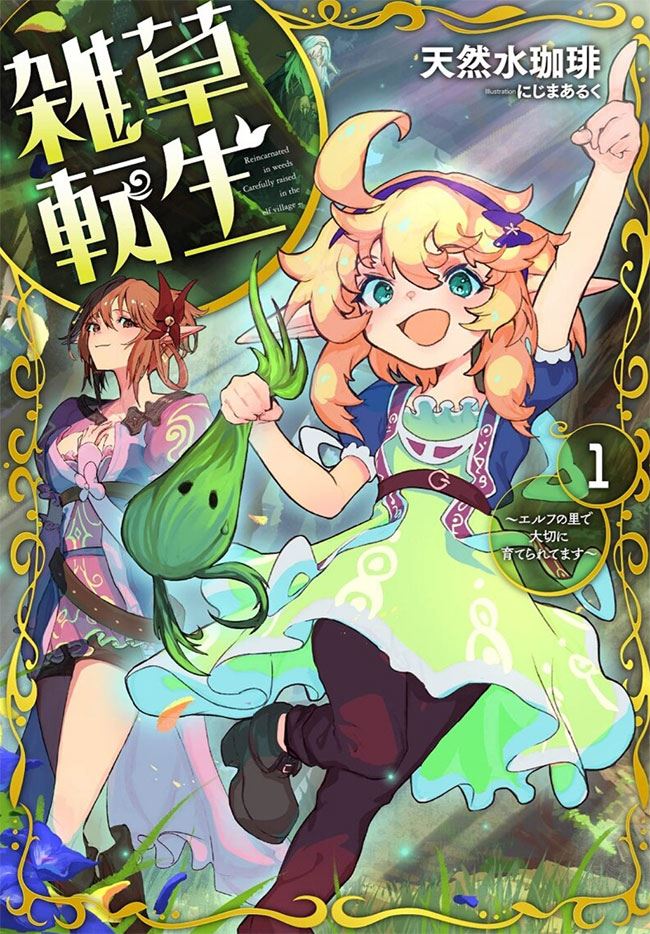
Weed Reincarnation ~ Carefully Raised in the Elf Village ~
+Add to Custom List
Sort
Add review
... Read More
The quality of the translation noticeably deteriorates as the chapters progress. While it is still possible to grasp the overall storyline, the inconsistencies in character names combined with the subpar grammar significantly detract from the reading experience. It’s quite frustrating because the core of the story is engaging and has so much potential. If the translation team were to invest a little time and effort into editing the text—specifically by correcting grammatical errors and ensuring that character names are consistent throughout—it could enhance the overall quality of the translation immensely. In fact, just these changes could elevate the reading experience by a staggering 900 times! A polished translation would not only help maintain reader engagement but also allow the essence of the original work to shine through more clearly. It’s a shame that these easily fixable issues are holding the story back from reaching its full potential. A little attention to detail could go a long way in making this an unforgettable read for fans of the genre.
... Read More
This novel definitely needs the attention of a skilled editor. While I can grasp the intended meaning behind the translator's words, doing so often requires me to painstakingly rearrange the sentences in my mind. This sort of cognitive juggling disrupts the reading flow and detracts from the overall enjoyment that readers should experience while immersing themselves in the story. As for the narrative itself, it currently presents as a slice-of-life isekai, featuring a typically kind-hearted and trusting Japanese protagonist. This characterization is familiar, and while it certainly has its charm, I hope to see more depth and originality as the plot unfolds. There is potential here for this story to evolve into something genuinely unique, particularly with the intriguing concept of the "world tree." If the protagonist manages to grow into a world tree while harnessing his own distinct powers and carving out a meaningful role within the world, the narrative could fulfill its promise. While I wouldn't go so far as to label it a hidden gem at this point, I do believe that it has the capacity to carve a niche for itself within the genre of slice-of-life isekai. However, I do worry that if the main character transforms into a human form, it might veer into the territory of the many redundant and clichéd novels that flood the market. This concern is not unfounded, as it seems to be a repetitive theme in similar stories. It is still too early to assign a definitive rating to this novel, but based on my observations thus far, I would place it somewhere in the range of 1 to 3 stars, possibly stretching to 4 depending on future developments. Given the current quality of translation and the fact that the narrative has yet to fully realize its potential, I would lean towards awarding it a modest 2 stars for now. With some refinement and creativity, who knows how much it could improve?
... Read More
The story really pulls you in with the slow, methodical start. The whole “I wonder how many sunrises I’ve seen” thought felt so natural for a plant that just gained consciousness. I loved how the author made moving as a weed feel like such a tedious chore—every step costs life force, you have to store energy in rhizomes, and you can’t just dash to a sunny spot. It made that first patch of sunlight feel earned.
... Read More
The way the protagonist uses “Yellow Life Force” and “Green Photosynthesis” sounds like straight out of a game, but it fits the whole “I used to be human but now I’m a weed” vibe. The skill names are a bit repetitive (everything is “Green”), but I appreciate how clear the mechanics are. It’s like reading a plant’s stat sheet.
... Read More
That moment when the weed tries to catch insects but fails and then goes “I’ll let you off this time” made me laugh. The self-awareness is hilarious. It knows it’s weak, but it still tries to save face. Typical gamer attitude even as a plant.
... Read More
I appreciate the small details: the rhizomes the size of garlic cloves, the feeling of the sun seeping into the “core”, the way the fruits drop as soon as they ripen because the stem can’t hold them. These details make the plant body feel real and physical.
... Read More
The prose has a slightly formal, almost literary feel—phrases like “it was a day too boring to be called ordinary” and “I cannot completely deny the possibility that I am an apple tree.” It gives the narrator a dry, witty voice. The translation seems to preserve a Japanese light-novel rhythm with short paragraphs and lots of ellipses.
... Read More
The elf speaks in a language the protagonist doesn’t know, but then understands “Japanese” when the protagonist thinks it. How? Is it some kind of universal translator magic? Or does being an elf give her telepathy? The story leaves it ambiguous, and I love the mystery.
... Read More
When the elf suddenly turns and looks directly at the weed, my heart jumped. The idea that she can hear the protagonist’s mental voice is a huge plot twist. Up until now, the weed was completely isolated, unable to communicate with anyone. Suddenly there’s a character who can understand it. That changes everything.
... Read More
The elf’s design is classic—golden hair, jade eyes, long ears, a green dress—but the description emphasizes her youth and innocence. The fact that she’s wandering alone in a forest full of giant bears and killer rabbits makes you worry. The protagonist’s “what are her parents doing” thought mirrors exactly what I was thinking.
... Read More
Then the elf girl appears, humming a cheerful melody. The shift in tone was immediate: from grim survival to something almost dreamlike. Her voice is described as beautiful, and the protagonist instinctively feels it’s not an enemy. That moment of trust felt earned because we’ve been in the protagonist’s head long enough to trust its instincts.
... Read More
I liked the growing routine: photosynthesize, store rhizomes, make poison apples, kill stuff, drain them, repeat. It feels like a survival game loop. The protagonist even mentions that leveling gets harder after 16, which hints at a longer grind ahead. Gives a sense of progression.

Leave a comment

You must be logged in to leave comments. or