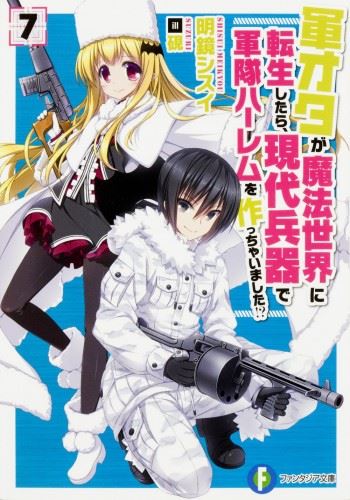
I feel it is essential to address some significant misinterpretations in other reviews regarding the narrative direction of this story. It appears that many readers are hesitant to delve into specifics, so allow me to clarify.
Chapter 19 seems to be the one that causes the most confusion among readers. In the grand scheme of the series, which spans over 100 chapters, this particular chapter comprises merely one or two pages, making its word count incredibly low. It's important to recognize that it is not an 'arc' in any traditional sense, but rather a brief segment that contributes to character development and plot progression.
Mild spoilers ahead. As is common with many other-world fantasy stories, this narrative incorporates the harem genre. The part that seems to have incited so much outrage can be found in chapter 11 of the manga. Here, we are introduced to Snow, the main character’s fiancée, and it's vital to note that he remains loyal to her throughout his adventures. Any criticisms regarding themes of NTR (Netorare) reflect a misunderstanding of what NTR actually entails, as the narrative does not engage with that trope at all.
Following Snow, the main character embarks on a quest to become a formidable adventurer. However, his journey begins with some misfortune; he is tricked by his first party, robbed, and ultimately sold into a form of slavery (which, amusingly enough, results in a comical situation despite the harshness of his treatment). The family that purchases him has a daughter—remember the harem element? This second girl is portrayed as incredibly cute, inspiring a protective instinct in the protagonist akin to that of an older brother. Their dynamic is further enriched as she affectionately refers to him as ‘big brother’ and later, in a sweet moment, calls Snow ‘big sister’, suggesting a bond forged in shared experiences and implied agreements pertaining to their growing relationships.
The second girl, a reclusive vampire who is generally apprehensive around men, has been pushed by her overbearing father to make the protagonist dress as a girl to mitigate the shock of her birthday party, which turns out to be a rather innocent introduction to companionship—complete with the added intrigue of occasional blood-draining, given the vampire’s unique needs. Over time, Snow grows to become good friends with the vampire girl, and she seemingly encourages the notion of stepping into the role of the second wife, while the main character exhibits reluctance in embracing this scenario, which, again, does not qualify as NTR.
In conclusion, while reviewers are entitled to their opinions, I felt an obligation to address these misconceptions directly. Whether you love or loathe the story, it's important to approach it with a nuanced understanding. Discrepancies in interpretations can lead to misinformation and, quite frankly, I’ll have no tolerance for those misrepresenting the narrative. So, with that said, let’s all strive for a more informed dialogue moving forward.