

Overall, this first chapter is a masterclass in setting up a web novel. It hooks you with a funny premise, introduces charming characters, builds a fascinating world through comedy, and sets up a deep, ancient mystery. The prose is clean and funny. The pacing is relentless. The character voices are distinct. It feels like the start of a very long, very fun ride. It understands its genre perfectly: it’s comedic, it’s fast, it’s full of potential for adventure, and it leaves you wanting more. I’m definitely adding this to my reading list. The voice is just so fresh and unique.

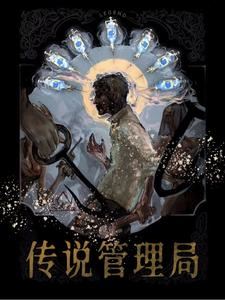
The final image of the "Legend Management Bureau" sign is a perfect cliffhanger. It's not a big explosion or a fight. It's just a sign. But it's the sign of the thing that Cui Jue mentioned. It's the physical proof of the mystery. It turns the abstract idea of "an abandoned bureau" into a physical location Du Yu is now standing in front of. It’s a quiet, creepy, and exciting way to end the first chapter. The adventure is about to start, and it all begins in this rundown shack at the foot of a spooky mountain. I'm ready to see what's inside.

The phrase "Tai Shu" (泰叔) is left untranslated, which is a bit of a puzzle. Is it a person? A demon? A natural law? The way the red-robed judge says "The Legend Management Bureau has been abandoned for nearly a thousand years. Haven't you seen enough Tai Shu?" implies it's a common phenomenon in this world, like a recurring glitch in reality. It's obviously linked to the central mystery. I'm excited to learn what it is. Leaving it untranslated adds a little bit of mystery and encourages the reader to look it up or figure it out from context, which is a smart writing trick.

I love the little details about the car. The sticker that says "Please take care of your belongings." The fact that they have to circle for ten minutes looking for a parking spot. It grounds this epic, mythological setting in such small, petty concerns. It's a constant reminder that the supernatural is just another job for these people. They have to deal with traffic, bad parking, and annoying bosses. This blend of the profound and the mundane is the book's greatest strength. It makes the world feel lived-in and hilarious, preventing the story from ever feeling too heavy or pretentious.

Du Yu's decision to choose reincarnation as a rich second-generation is so understandable. He had a boring, poor life. Of course he wants to try the easy path. It's a very human and selfish desire. It makes his ultimate choice to accept the dangerous mission from Cui Jue a real sacrifice. He's giving up his guaranteed (if massively delayed) dream for a chance at a quick reward and a mystery. It shows a hint of ambition that he probably never had in life. This core conflict – the safe but slow path versus the risky but fast one – is a great foundation for his character arc.

The visual of the city in the underworld is stunning: "an enormous ancient city stood majestically underground... filled with ghostly fires, and the lights of countless homes were a faint green glow." It’s a classic but effective description. It uses familiar imagery (an ancient city, a green river) but places it in a totally new context. The "Ghost Gate" being hundreds of meters high gives it a sense of scale that feels both ancient and alien. These descriptions aren't long or poetic, but they are effective. They create a strong sense of place in just a few sentences, which is crucial for a fast-paced story.

I'm slightly worried the story might get too complex. Setting up a thousand-year-old mystery, a bureaucratic underworld, and a "Legend Management Bureau" all in the first chapter is a lot of plates to spin. I hope the author is able to focus on one main thread and not get lost in trying to explain every detail of this world too quickly. A slow burn on the central mystery, while we learn about the day-to-day life of the underworld through Du Yu's eyes, would be my preferred approach. Dumping too much lore at once could bog down the snappy pace.

The characterization of Fan Xiaoguo is a highlight. She's the driver, the practical one, and seems a bit more grounded than Xie Jin. Her reaction to the red-robed judge ("So what if it was Tai Shu?!") shows she's not afraid to speak up for her "client" even if it gets her into trouble. I like that she's not just comic relief; she has a sense of duty. Meanwhile, Xie Jin is more of the people-pleaser and diplomat, apologizing and explaining. Their dynamic is complementary. You can see why they work well as a pair. They feel like a buddy-cop duo for the supernatural world.

This book has a fantastic "one more chapter" quality. Every scene ends with a question. Why did that old man not take the seat? Who is Du Yu to the judge? What's on Mount Unreturn? The writing style is geared towards serialization. The minivan arriving, the judge's slap, Xie Bi'an's laughter – these are all perfect stopping points that make you hungry for the next segment. It's the kind of story you can easily see yourself reading late into the night, just following one more lead. The episodic nature fits the mystery and the journey perfectly.

I'm a little lost on the timeline implications. Cui Jue is from the Tang Dynasty (Zhenguan period), and he has no memory of Du Yu until he meets him. Then Xie Bi'an seems to understand it instantly. This suggests Du Yu might be some kind of time-traveling soul or a reincarnation of someone important. The "Legend Management Bureau" being abandoned for almost a thousand years (since the Tang Dynasty!) is a huge clue. It suggests the mystery isn't just about Du Yu's death, but about a thousand-year-old event that he might be the key to. This is a very ambitious plot for a story that started with a minivan.

The scene where the red-robed big man judge tries to brush off Du Yu as an "accidental death" was infuriatingly realistic. It perfectly shows the problem with any large system: people trying to meet their quotas, avoid paperwork, or just be lazy. It makes the intervention of Judge Cui Jue so satisfying. Seeing a figure of ultimate justice and power show up and immediately call out the bullshit is a classic power fantasy moment. It instantly made me like Cui Jue and trust that the system, while flawed, has some genuine protectors at the top. It's a simple but effective way to build authority.

I have to give props to the author for the "harmonious underworld" joke. The document title includes "Jointly Creating a Harmonious Underworld." It’s a perfect satirical jab at corporate or governmental mission statements. It shows that the afterlife has its own propaganda and official slogans. This attention to detail, using modern concepts to comment on the bureaucracy of the spiritual world, is one of the book's strongest features. It makes the world feel lived-in and real, even if it's completely fantastical. It's a satirical edge that I hope they keep using throughout the story.