Summary

... Read More
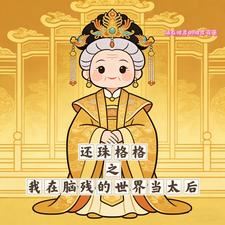
Lin Xiaoxiao, a modern office worker who died after being hit by a car while working overtime, awakens in an unfamiliar antique bed. Initially believing she has been rescued by a wealthy tycoon, she soon realizes from the words of an elderly woman called Granny Gui that she is the Empress Dowager of an ancient palace, rendered disoriented by a recent high fever. Panic sets in when she discovers her body has aged into an elderly woman, but her shock deepens upon seeing Emperor Qianlong himself—an actor’s face she recognizes from the television series Princess Huanzhu. She deduces she has not traveled to a historical Qing Dynasty but to a fictional world woven from Qiong Yao’s dramas. By questioning Granny Gui, she learns the year is the thirteenth year of Qianlong, Consort Ling is in confinement after giving birth to the Seventh Princess, and there is no princess named Qing’er yet. Understanding she is in the era before the events of both Princess Hanzhu and Plum Blossom Mark, Lin Xiaoxiao accepts her new life, vowing to prevent the tragic fates of kind characters, especially Qing’er, whom she plans to raise properly. Soon, the Empress—who in this world is named Ulanara Jing Xian—visits with Yong Ji, the young prince, and a girl named Lan Xin, the orphaned daughter of Prince Qi. Lin Xiaoxiao decides to intervene, proposing to Qianlong that Lan Xin be adopted by the Empress to grant her a proper status. The Emperor agrees, and Lan Xin tearfully accepts her new family. When the imperial consorts come to pay respects, Lin Xiaoxiao struggles to recognize them but uses Granny Gui as a prompt. She advises Noble Consort Chun not to stress her son Yong Zhang too much with studies. Annoyed by the early morning tribute ritual, Lin Xiaoxiao plans to abolish or modify the custom to prioritise her sleep. She also recognises the potential threat from a villainous fake Beile from the Plum Blossom Mark storyline but cannot yet act without evidence. Throughout these interactions, Lin Xiaoxiao adjusts to her role, appreciating the comforts of being the highest-ranked woman in the palace while determined to change narratives she knows lead to heartbreak. She resolves to protect Lan Xin from future harm and to ensure Qing’er will not be dragged into the destructive aftermath of her friends’ mistakes. Abandoning the title “Old Buddha,” she asks the Emperor to call her simply “Empress Dowager,” hoping to cultivate a more familial atmosphere. Despite the physical limitations of age and unfamiliar palace protocols, Lin Xiaoxiao embraces her second chance, ready to use her knowledge of future plots to safeguard those she cares about while navigating the intricate politics of the Qing court.

Associated Names

还珠格格之我在脑残的世界当太后
Latest Release
DateGroupRelease
2026-05-29lightnovelasia c35
2026-05-29lightnovelasia c34
2026-05-29lightnovelasia c33
2026-05-29lightnovelasia c32
2026-05-29lightnovelasia c31
2026-05-29lightnovelasia c30
2026-05-29lightnovelasia c29
2026-05-29lightnovelasia c28
2026-05-29lightnovelasia c27
2026-05-29lightnovelasia c26
2026-05-29lightnovelasia c25
2026-05-29lightnovelasia c24

Community Reviews

Rating(4.2 / 5.0, 33votes)
5 stars
15(45%)
4 stars
10(30%)
3 stars
8(24%)
2 stars
0(0%)
1 stars
0(0%)

Popular reviewsMore Reviews»

... Read More
One last thought: the narrative is missing a clear antagonist for the early chapters. The Emperor, Empress, and consorts are all nice. Even Noble Consort Chun is polite. That’s unusual for a palace setting and lowers conflict. Maybe that’s by design, to establish a “honeymoon period” before the later brain-dead characters appear. I trust that’s the case because the author has set up multiple conflict lines: exposing the fake Beile (rat), navigating the coming of Xiao Yanzi, etc. But for now, the story is a lot of planning, not much executing. The lack of immediate danger makes the first few chapters more of a setup than a story. But set-up is necessary for a long serial. I’m being patient and enjoying the ride. I just hope the author doesn’t get bored of building and jumps into action too fast. Balance is everything.
... Read More
Overall reading experience is high. The humor lands often, the protagonist is compelling, and the world is expertly familiar to anyone who grew up watching Chinese period dramas. I even texted my friend about this story. That’s a sign of engagement. The only weakness so far is the depth of supporting characters and occasional plot convenience (quick title change, easy adoption). But the strengths—character voice, meta-humor, emotional core about saving favorite characters—heavily outweigh the weaknesses. This is the type of novel I would stay up late to read, eager to see what chaos Lin Xiaoxiao wreaks next. I can already imagine her sipping tea while outmaneuvering Xiao Yanzi. The 30th line of thought is: I hope the author keeps up this quality and doesn’t fall into the same traps the original dramas did. If they can maintain this comedic critical yet affectionate tone to the end, it could be a cult classic. For now, I’m fully hooked.
... Read More
The line “I didn’t transmigrate into ancient times, but into a brain-dead TV drama” is the thesis statement of the book. It perfectly captures the dual awareness of the setting—acknowledging the original source’s flaws while embracing its entertainment value The author’s critical stance (calling it brain-dead) shows a postmodern engagement with fandom. It’s more than just a story; it’s commentary. I love that. But I am wary that constant hating on the source material could get old if it’s the only joke. The story needs to build its own plot loops, not just rag on the original. The adoption of Lan Xin and the plan to protect Qing’er are good starts. I hope we see original plot involving court, not just pre-canon fixes. The potential is there. So far, the author hasn’t leaned on repetition. Each scene reveals a new aspect of Lin Xiaoxiao’s plan. That gives me confidence.
... Read More
For a Qiong Yao crossover, the story so far avoids the melodramatic fluff that defines that author’s work. There is no tragic heroine crying over a lost scarf. That’s a massive improvement. Lin Xiaoxiao’s common sense cuts through potential melodrama, which is refreshing. For instance, when she advises Noble Consort Chun to not push her son too hard, it’s rational parenting advice. That tonal difference sets this story apart from typical fanfiction of these dramas. The protagonist is a corrective lens. I hope the author maintains this rationality even when the brain-dead characters (Xiao Yanzi, etc.) eventually arrive. If she gets pulled into drama, the point would be lost. The story’s power comes from her modern sensibility clashing with historical tropes, so preserving that contrast is essential. So far, the author understands the assignment.
... Read More
The multiple references to boss not paying her salary, wanting to grab antiques, and dieting, weave her modern past into her ancient present. It grounds her character and makes her relatable. The language is colloquial, with phrases like “what the heck” and “brain-dead,” which makes it feel like I’m inside the head of a modern adult. That’s a plus for immersion. But it also limits the story to a very specific type of humor—those who don’t enjoy fourth-wall-breaking, self-aware protagonists may get tired quickly. I personally love it. The writing feels like a conversation with a friend who is gossiping about drama plots. It's energetic and fresh. The tension between this modern slang and the formal palace setting creates a constant friction that is the main source of comedy. I can see why someone might call it cringe, but for me, it hits the sweet spot.
... Read More
Lin Xiaoxiao’s comfort with her new body is suspiciously fast. She felt her hands and saw wrinkles, was devastated, but after a few days, she’s fully scheming and joking. The narrative doesn’t dwell on body dysmorphia, which is fine for a comedy, but might feel jarring if realism is expected. The author focuses on her mental youth rather than physical age. That’s actually clever—it allows her to be a “young at heart” grandmother without the constraints of an old body limiting actions. But in the flowerpot shoe scene, she is physically weak and needs support, so the contradictions are present. The story seems to want to have it both ways: old enough to be respected, young enough to be active. I hope the author commits to some physical limitations eventually, for consistency. Otherwise, the only reason for being old is the title. It could be a missed chance for deeper exploration of aging.

See all reviews

Characters

See all characters

Custom lists

See all custom Lists