I might be jumping the gun a bit by forming a strong opinion at this early stage, but I must admit that this novel does not quite live up to expectations.
One of the few redeeming qualities I can find is the mild world-building and thematic elements, though I would argue that they are somewhat lacking. Aside from the intriguing premise of summoning personalized mechs, there's not a lot that feels fully developed or engaging within the narrative.
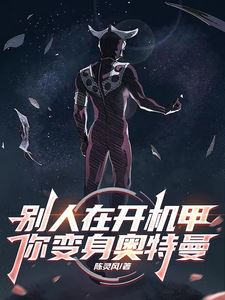
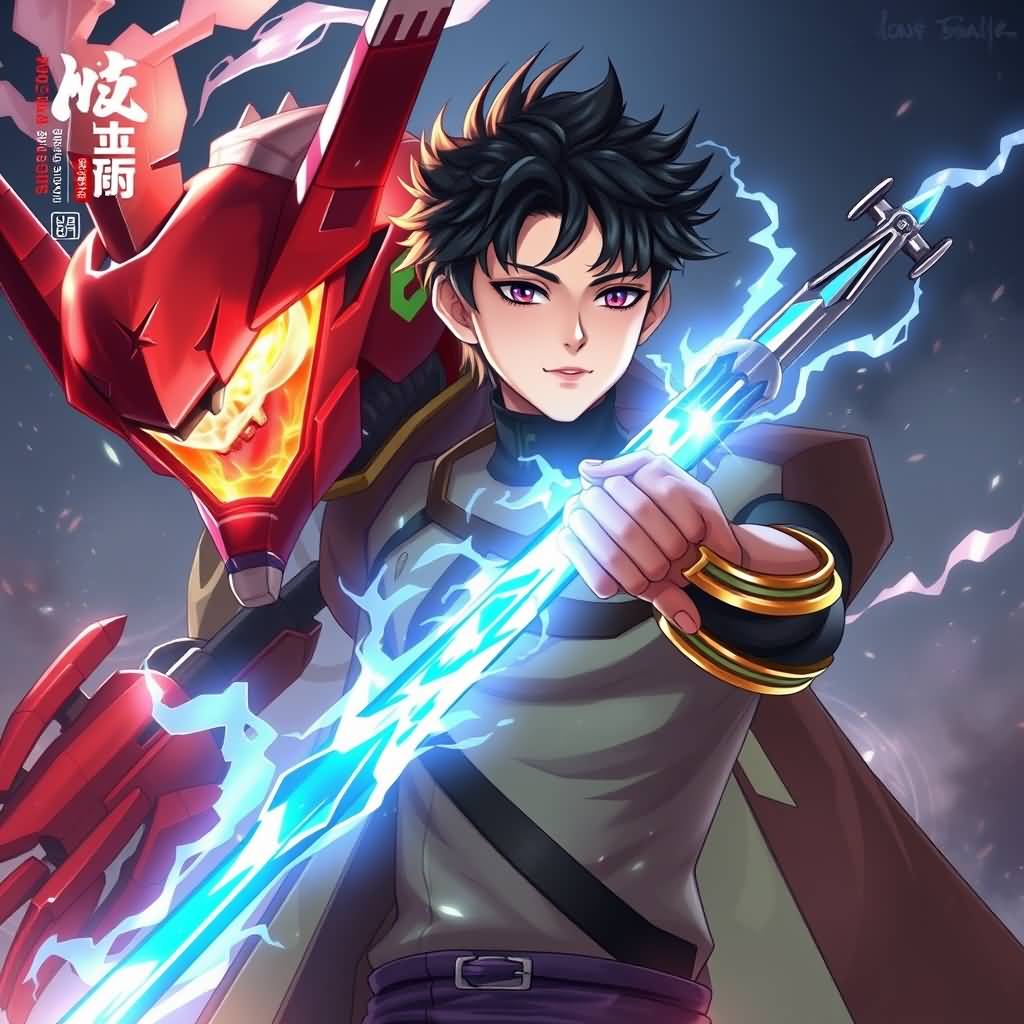
Let's start with the protagonist, Chen Yi. He begins his journey as a man in his 30s with a fondness for Ultraman, only to find himself inexplicably transported (or isekai'd) into a younger version of himself within a parallel universe where Earth is under alien siege. Enrolling in a mech training academy, he aims to become a defender of the planet. Interestingly, he finds himself living with his mother, a character who tragically passed away in his original life, driving him to protect her in this new reality. This establishes him as a quintessential family-first character; however, he possesses peculiar physical attributes from his kung fu training in his previous life, which undeniably gives him an edge. The admiration he garners for his impressive fighting skills feels a bit superficial though, especially when he nonchalantly withstands 20 times normal gravity during his training. One has to wonder if this is somehow linked to his Ultraman influence.
Moving on to the world-building, we find humans have become significantly more technologically advanced, utilizing an alien technology known as the 'Mother Core' to create mechs of varying ranks, from C to SSS. Our main character starts with a C Class mech but showcases skills that enable him to stand toe-to-toe with an A Class mech piloted by an experienced veteran, which seems a tad unrealistic. Mechs in this universe are classified into different types, heights, and weight categories, yet the author barely elaborates on these distinctions, only glossing over the fact that Speed-types are rare. The main character's abilities effectively render the class system irrelevant, as he consistently overcomes challenges that theoretically should be beyond his capabilities, easily defeating a classmate piloting an SS Class mech.
Truly, the mech-summoning gimmick is the sole feature that elevates this novel above a one-star rating. The writing itself falls short of expectations, with a series of disjointed battles and alien attacks erupting every few chapters, pushing the MC into a constant cycle of conflict. In dire moments, he can transform into Ultraman Leo, but strangely, everyone in this world mistakenly believes Leo to be just another bizarre red mech. While I hold a certain respect for Ultraman, his inclusion in this story feels entirely superfluous; it essentially acts as an overpowered secret identity rather than a meaningful aspect of the narrative.
Then there's the so-called Mechanical God Cult. They appear out of nowhere, engage in acts of terrorism, get swiftly defeated, only to return as a recurring villainous faction that threatens humanity. Unfortunately, little to no background information is provided about their motives or ideology, aside from the vague detail that they are capable of controlling monsters and stealing mechs, despite those mechs being intimately tied to specific pilots. Their betrayal of humanity is a significant plot element that lacks any substantial exposition.
One plot twist that particularly irked me was the revelation about the MC's mother. As it turns out, she is not just an ordinary woman, but a highly regarded super researcher who studied the Mother Core. In an astonishing turn of events, she apparently bestowed upon the MC an experimental upgrade to his mech, transforming it into a fully sentient machine with the ability to shapeshift into liquid nanomachines. This upgrade allows the mech to create body doubles of the MC, serve as a training partner, or function as an armor suit. While this concept is undeniably creative, it caught me off guard and detracted from the overall immersion of the story.
In conclusion, despite the potential that this novel harbors, the execution falls short in numerous areas, creating a disjointed reading experience that lacks depth and coherence. It certainly leaves a lot to be desired, particularly for fans of the genre.