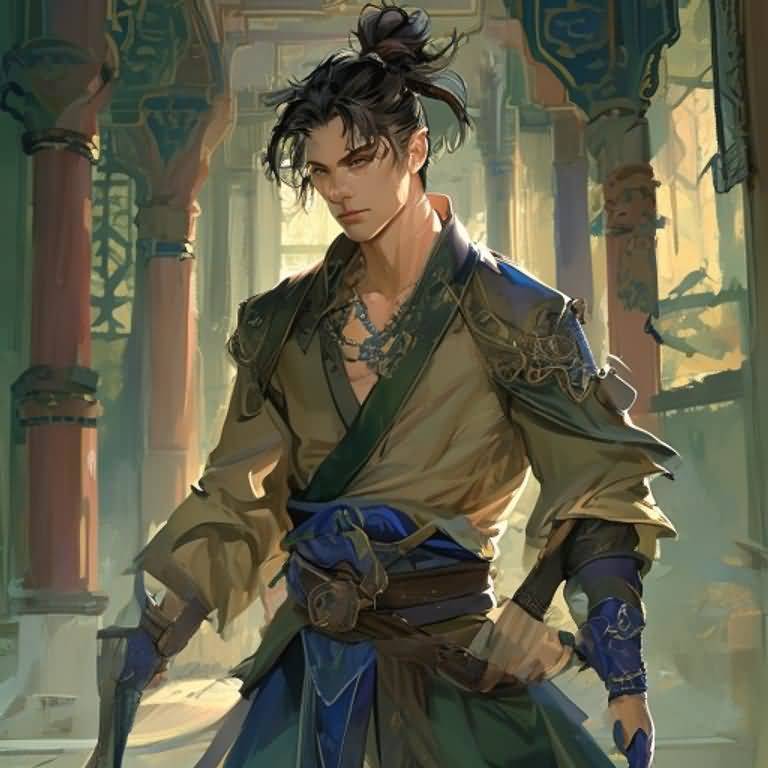
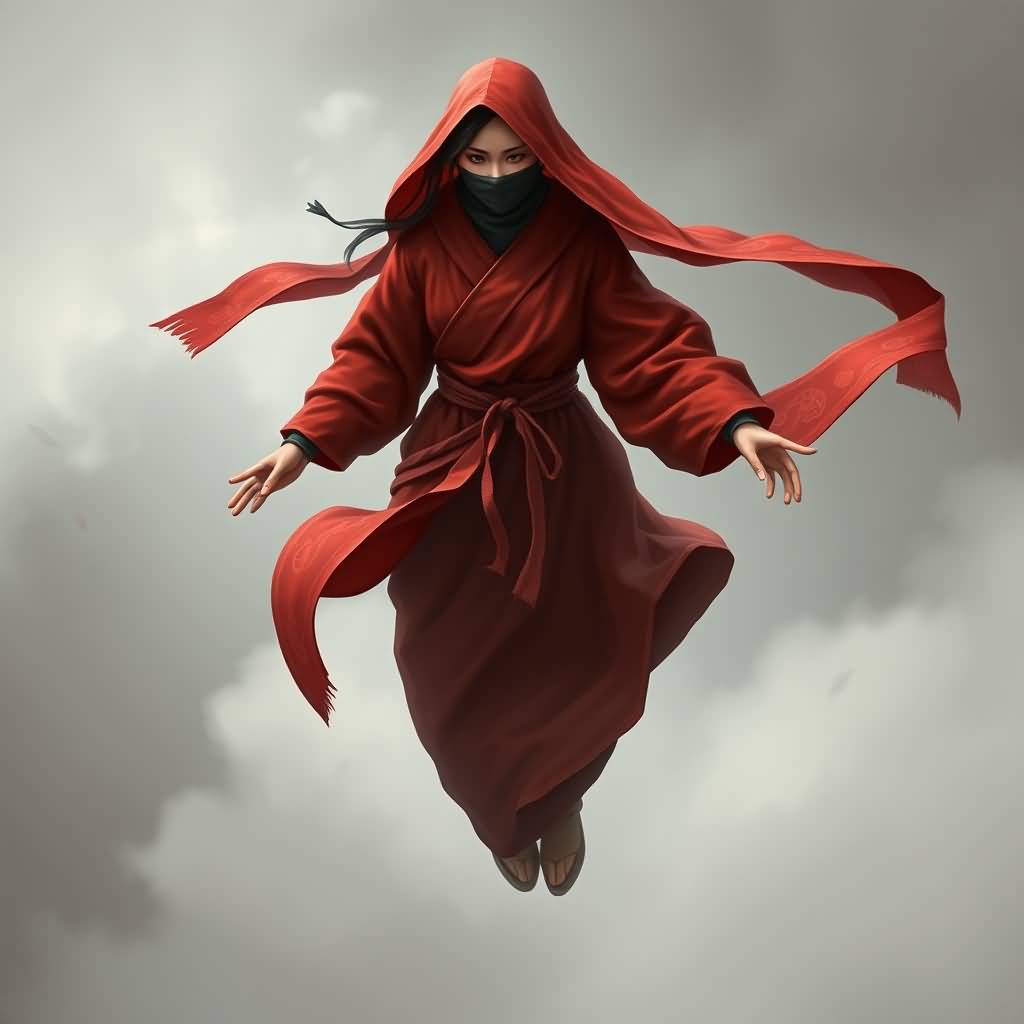
A woman in a red robe, her face hidden by gray black gauze, commands nearly a hundred subordinates to seal off the Wei Kingdom and bring a man back within three months, alive or dead. She serves an Elder whose immortal technique depends on this capture. The subordinates scatter in groups.Wei Xing awakens at the entrance of a dilapidated monastery called Qingyun Temple, disoriented and in pain. Massive memory fragments crash into his mind. He remembers his past life: raised in the countryside, worked hard to study, earned a master’s degree in weapons, but faced unemployment and ended up working as a pig slaughterer. Now he finds himself in a strange body, thin and covered with whip marks, bruises, and what appear to be hickeys. His clothes are torn and bloodstained, and he wears no pants. Panic and grief overwhelm him as he realizes he has crossed into another world. He cries, curses the heavens, and performs three salutations to his faraway parents. A thunder strike sets a tree on fire, punctuating his despair. He resolves to live in this new world.He explores the monastery, finding a dry well that reflects a faint light. He retrieves an ordinary-looking sword from the well. When he draws it, a clear ring sounds, and he feels lighter and more spirited. Testing it on branches and weeds, the sword cuts through without resistance. He declares it a good treasure and decides to carry it for protection.The rain pours through the night. Wei Xing takes shelter in the main hall, burns parts of the monastery for warmth, and falls asleep. He dreams of a dying man begging for help and of a woman in a red scarf who stares at him playfully, then turns into a fierce ghost attacking him. At the same time, in a distant palace, a woman with red pupils lying on a long chair senses him. She pinches her fingers, smiles, and sends servants to the Qingyun Mountain Range to bring him back. Wei Xing wakes shivering, sweating with cold fear.At dawn, Wei Xing observes the monastery layout: side rooms, a kitchen, a well. The plaque reads Qingyun Temple. He recognizes the characters instinctively, puzzling him. He looks at the dilapidated stone statue of Qingyun Zhenjun and jokes about asking the immortal for delivery back home. He decides to leave.He finds a piece of cloth to cover his gaunt face and uses a branch to tie his long hair. Sticking the sword in his back, he walks down the mountain humming a folk song.Days later, Wei Xing reaches a village at the foot of Qingyun Mountain. He is exhausted and hungry. He had encountered a bear while descending, and only by using the sword to force the bear back did he escape. When he appears on the village road, his clothes torn and looking disheveled, the villagers avoid him. Children try to steal his sword. He asks for a simple meal, willing to work in exchange, but the crowd disperses quickly. Only an old man with slow legs remains. Wei Xing stops him and pleads.The old man, who goes by Old He, hesitates but invites Wei Xing to his home. Once there, Old He explains why villagers avoid him: his Taoist robe makes them fear him. Many years ago, Taoists from various temples began recruiting “Immortal Children” for unknown purposes. The children never returned. Old He’s own children were taken more than twenty years ago and never came back. The villagers believe that Taoists are liars who steal people. Wei Xing clarifies that he is a wandering wild crane, not from the Wei Kingdom, and has no intention of recruiting anyone. Old He’s attitude softens. Wei Xing asks about the location and learns this is Qingzhou, part of the Wei Kingdom, with Qingping County to the east. Old He knows little beyond that. Wei Xing expresses his gratitude and his desire to reach a larger place to learn more.During dinner of simple vegetable paste, Wei Xing senses Old He’s lingering sorrow about his lost children. After the meal, Wei Xing sews his torn clothes using Old He’s linen, combining cyan and yellow patches. Exhausted, he falls asleep and dreams again: he is a delicious lamb, tightly held in the jaws of a pack of wolves. No matter how fast he runs, the wolves refuse to let go.