Summary

... Read More
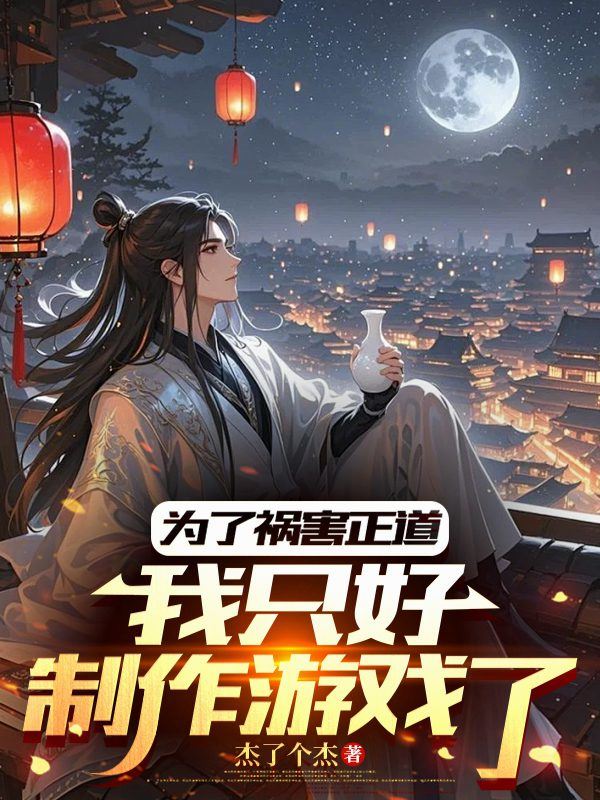
Lu Ze transmigrated into the body of an outer disciple of the Lingxiao Sect, a cultivation sect on the Tian Xuan Continent. With only mediocre aptitude and a perfect memory as his sole talent, he spent three years trying to activate his system by writing novels from his past life. He discovered that the system required one thousand emotional points to activate, but only negative emotions were counted. After copying *The Condor Heroes* and triggering a massive surge of negative emotions from the disciples reading his tragic story, the system finally activated. It was called the Demonic Path Child System, branding him a demonic cultivator. The system required him to kill righteous cultivators to gain demonic path value, which could improve his cultivation base. This put him in extreme danger because demonic cultivators were hunted relentlessly by the righteous path, and the Lingxiao Sect itself was a righteous stronghold. Lu Ze could not simply kill disciples, as his cultivation was only at Qi Refinement third layer. He realized that if he could cause righteous cultivators to die inside a trial illusionary realm he created, the deaths would still count for his system.Using his talent in artifact refinement, his past life experience as a game designer, and the programming logic he understood from that world, Lu Ze designed a game called "Demonic Cult Escape" based on the concept of an endless runner. He placed it within the cultivation hall's large illusionary realm, presenting it as a trial for practicing the basic body technique Broken Cloud Art. In the game, players had to escape from a terrifying demonic cult monster while following strict rules: only Broken Cloud Art could be used, and touching barriers, mechanisms, or the monster resulted in instant death. Players collected spirit stones, avoided traps like fire talismans and arrow rain, and could use accumulated spiritual energy to activate acceleration skills. The game featured a scoring system, distance tracker, leaderboard, and a home page with a shop where players could purchase mounts, magical artifacts, and new cultivation techniques using spirit stones collected in the game, all set with exaggerated prices to encourage repeated play.The outer disciples quickly became addicted to the game. Zhang Ming, one of the players, improved his Broken Cloud Art from minor accomplishment to major accomplishment within an hour and a half, far faster than the usual two months. This convinced him that the game was a profound ancient secret realm created by an unfathomable power. Lu Ze received a system prompt: because Zhang Ming was fully convinced by the game, Lu Ze randomly obtained Zhang Ming's Broken Cloud Art at major accomplishment. This confirmed that Lu Ze could absorb abilities from players who were completely impressed by his game. More importantly, Lu Ze discovered that when players died in the game, he gained small amounts of demonic path value, even though the amount was far less than killing a real cultivator. Since players could die infinitely in the game, this opened a sustainable method to farm demonic path value.To complete a system mission requiring him to prevent more than thirty percent of Lingxiao Sect disciples from cultivating peacefully for five days, Lu Ze needed to keep them playing the game nonstop. However, the outer disciples' temporary tokens for the trial had a daily three-hour limit. Lu Ze spent three days crafting unlimited-duration temporary tokens that could only be used for Demonic Cult Escape and sold them for one spirit stone each, allowing five days of uninterrupted play. The disciples eagerly bought them. One disciple named Wang Ba, who ranked very low on the leaderboard, angrily complained that the trial was inferior to the real cultivation illusionary realm used by inner disciples and accused Lu Ze of deliberately giving them worse content. Lu Ze responded by casually demonstrating his own Broken Cloud Art at major accomplishment, moving behind Wang Ba in an instant, telling him that if he was bad he should practice more. Wang Ba, humiliated, stormed off. Lu Ze decided that if Wang Ba returned to take the trial again, he would design a special set of levels to ensure Wang Ba stayed dead last forever. Lu Ze felt that making games was the correct path for using his system, because it allowed sustainable development of demonic path value without having to kill cultivators directly, and he could even gain abilities from players who admired his work. He began to think about how to attract inner disciples and even elders to play his games, dreaming of using game creation to become the strongest cultivator, forgetting for a moment that he was actually a demonic cultivator hiding within a righteous sect.

Associated Names

In Order to Harm the Righteous Path, I Had to Make Games
为了祸害正道,我只好制作游戏了
Latest Release
DateGroupRelease
2026-05-29lightnovelasia c275
2026-05-29lightnovelasia c274
2026-05-29lightnovelasia c273
2026-05-29lightnovelasia c272
2026-05-29lightnovelasia c271
2026-05-29lightnovelasia c270
2026-05-29lightnovelasia c269
2026-05-29lightnovelasia c268
2026-05-29lightnovelasia c267
2026-05-29lightnovelasia c266
2026-05-29lightnovelasia c265
2026-05-29lightnovelasia c264

Community Reviews

Rating(4.3 / 5.0, 37votes)
5 stars
15(41%)
4 stars
9(24%)
3 stars
6(16%)
2 stars
0(0%)
1 stars
0(0%)

Popular reviewsMore Reviews»

... Read More
I've made my way through Chapter 216, and unfortunately, I have to say that my experience with this story hasn't improved at all. The main character (MC) often feels like nothing more than a pawn in the system's game—a mere lapdog, if you will. His motivations seem to be driven primarily by the rewards of the system's missions, coupled with a rather sadistic desire to accumulate points. Even when the MC doesn’t intentionally try to manipulate situations, it often feels like he unwittingly benefits others around him. This includes instances where his inner demons lead to berserk moments, which somehow end up gaining him goodwill and protection from other users, cleverly hiding his ulterior motive of farming demonic points. One of the overarching themes of the narrative—that every game inherently torments its users—may be apparent from the title, but I find it rather off-putting. The relentless cycle feels like nothing more than continuous torture disguised as entertainment, with bait rewards designed solely to retain users' interest. There's a predictable formula that plays out: a dilemma arises, the MC remains inactive, the system intervenes with a mission, and then the MC is thrust into creating a game as a response. Thus far, there hasn’t been a single game that the MC has crafted entirely on his own accord. Every game seems to emerge from either directives from the elders or the system itself. This reliance on external prompts diminishes the depth of the character and his agency within the story. Moreover, it's quite absurd how swiftly the MC’s cultivation has ascended—he’s achieved Golden Core level in just a few months—but yet he still insists on subjecting users to torment as if that's the only pace for progress. Additionally, the narrative glaringly lacks meaningful scenes that take place outside of the game environments. While the games are consistently presented as beneficial for cultivation, there are no real demonstrations of how they effectively enhance the characters' abilities. For instance, it would be fascinating to see a comparison between a gamer and a non-gamer in a duel, showcasing the tangible improvements in their cultivation as a result of gameplay. So far, we have only encountered vague references to opportunities and breakthroughs, which leaves a lot to be desired in terms of demonstrating the actual impact of these gaming experiences on cultivation. Overall, I find myself hoping for a more dynamic and engaging narrative that empowers the MC and better illustrates the effects of the games, rather than one that feels like a chore to slog through.

... Read More
This novel has a fantastic start! From the very beginning, I found myself laughing out loud multiple times, and I'm only at chapter 11. The premise brilliantly melds modern knowledge with a medieval cultivation setting, creating a uniquely engaging experience. To be more specific, the focus here is on games, which adds a refreshing twist to the traditional wuxia genre. There's a brief mention of the main character introducing wuxia novels, but so far, the narrative revolves primarily around the creative implementation of games, and I couldn't be more delighted by it. What truly stands out is how the author manages to incorporate humor into the story without veering into nonsensical comedy. Instead, the humor arises organically from the interactions and reactions of righteous cultivators grappling with modern gaming concepts. It's a clever juxtaposition that brings both realism and levity to the narrative. Additionally, the main character enjoys a unique system that assigns missions and rewards each time a cultivator meets their demise in his game. Crafting a story that is both engaging and credible within such a whimsical framework is no easy feat, but the author executes it masterfully. Equally commendable is the translation quality, which effectively conveys the author's vision. However, I did notice a few inconsistencies concerning gender pronouns, though I view these as minor hiccups rather than significant detractors. As of my latest update at chapter 44, the pronoun inconsistencies appear to have been an exception rather than the norm, and the overall quality of the narrative remains consistently high. While the main character is becoming increasingly overpowered (OP), the joy of reading this novel lies in the fascinating development of game creation and its repercussions, rather than solely focusing on the MC's cultivation journey. It seems that the powerful system that assists the MC in cultivation might also serve as a means to justify the creation of even larger and more intricate games. Overall, I can genuinely say this is an excellent novel, filled with humor and creativity, that keeps me eagerly turning the pages. It’s a delightful blend of gaming culture and traditional cultivation themes that I highly recommend to anyone looking for a refreshing take on the genre!
... Read More
The novel presents a remarkably unique concept, with its ever-changing arcs that consistently keep the reader on their toes. The creativity displayed in its narrative structure is genuinely commendable, allowing for unexpected twists and turns that make it an intriguing read. However, the story faces a significant hurdle due to the lack of stakes involved. The absence of tangible consequences or a real sense of progression undermines the overall impact of the plot. It often feels as though the cultivation level of the main character (MC) and the outcomes of various games lack meaningful significance. Without any real repercussions or growth, it's difficult for readers to feel invested in the MC's journey or the challenges they face. The first fifty chapters are undoubtedly enjoyable, filled with engaging scenarios and a sense of novelty. Unfortunately, after this promising start, the excitement tends to wane rather quickly. As the narrative shifts to continuously introducing new games, it begins to feel repetitive and lacks the depth needed to keep readers truly engrossed. The novelty that once captivated the audience starts to fade, leaving them yearning for a more compelling narrative arc with higher stakes. In summary, while the premise of the story is fresh and offers plenty of potential, the lack of meaningful consequence and progression ultimately detracts from what could have been a truly fascinating read. A stronger focus on stakes could elevate the overall experience and breathe new life into the unfolding saga.
... Read More
When it comes to the cultivation category within Chinese novels, I often find myself sifting through a sea of unreadable works riddled with various issues. Common complaints include overly arrogant main characters and cultivation plots that derail the story’s inherent appeal. However, this novel stands out as a refreshing exception. In this narrative, the protagonist does not merely copy-paste elements from a game; instead, he endeavors to harmonize those elements with the unique aesthetics of the world he inhabits. While it's true that he exhibits a certain level of arrogance, it's not to the extent that becomes grating, as is often the case with other Chinese main characters—some of whom can be downright unbearable. Here, the face-slapping tropes exist but are handled with a level of moderation that makes them more palatable than in many other cultivation novels I have encountered. What truly sets this story apart is its unwavering commitment to the concept of gaming. The plot never veers off course into unrelated territory; it embraces the premise of game creation and development wholeheartedly. This focus not only maintains coherence but also enhances the overall reading experience, allowing for a deeper connection with the storyline. I could delve deeper into the intricacies that make this novel compelling, but I firmly believe that such insights are best experienced firsthand. Whether you’re a fan of cultivation novels or not, I highly recommend giving this one a try. It feels like a genuine breath of fresh air in a genre that frequently suffers from repetition and cliché. You might just find yourself pleasantly surprised by what this novel has to offer.
... Read More
This novel truly delivers on the classic "face-slapping" trope. To put it simply, we witness one villain getting soundly defeated, only to have another villain eagerly stepping up, practically begging to be dealt the same fate. While this trope is quite generic and may even overshadow the more compelling elements of the narrative, I do appreciate the author’s commendable effort to infuse the story with a unique twist. Instead of relying on outright plagiarism, the author has opted for a more localized and down-to-earth approach to cultivation culture, which adds a charming authenticity to the plot. I enjoy the subtle nods to the original source material, which enhance the experience rather than detract from it. However, I ultimately felt compelled to rate the novel a three out of five. This is largely due to the absurdly exaggerated rewards doled out by the system—it's all rather over-the-top. The lack of balance in the progression system is glaring, and the protagonist's rapid increase in power seems almost implausible. It appears that the explanations surrounding his advancements in the "game" are significantly shorter than the flows of both character reactions and gameplay, which leaves much to be desired in terms of depth. In summary, while I can appreciate the attempts made to craft an engaging and original narrative, the overwhelming elements of excessive rewards and hasty character development led me to ultimately drop the story. It had potential, but the imbalance was simply too great for me to ignore.
... Read More
This novel is a delightful and relaxing journey that stands out in the cultivation genre for its light-hearted tone and low-stakes environment. Rather than the usual life-or-death struggles that are common in many cultivation stories, the stakes here are refreshingly low; the main character (MC) is solely focused on creating the ultimate "VR" (illusion) games that captivate and enthrall the cultivation community, aiming to make all cultivators hopelessly addicted to their immersive experiences. The narrative is particularly enjoyable for readers who have a fondness for video games, especially those played on PC. The illusion games featured throughout the story are cleverly crafted references to actual popular titles, adding an extra layer of enjoyment for gamers. This playful integration not only enhances the humor but also creates a vibrant and relatable atmosphere that resonates with anyone familiar with the gaming world. Furthermore, the "face-slapping" moments—where the MC cleverly outsmarts opponents or defies expectations—are executed with satisfying precision, providing humorous and uplifting moments throughout the storyline. Overall, if you’re looking for a light-hearted read that combines elements of gaming culture with a unique twist on the cultivation genre, this novel is certainly one to consider. It’s a charming escape that celebrates creativity and the joy of gaming, making it an enjoyable experience for both gamers and non-gamers alike.
See all reviews

Characters

See all characters

Custom lists

See all custom Lists