Summary

... Read More
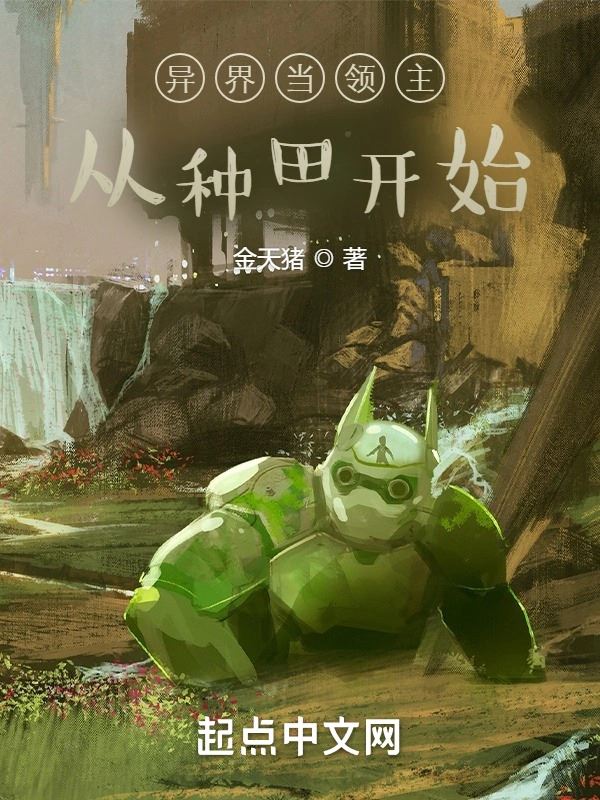
Yan Xu, an ordinary man from Earth, transmigrated into Owen Hydra, a Viscount of the Northern Border in a medieval world. He had once fantasized about being a protagonist in a novel, but reality crushed those dreams. The Hydra family was not a noble by inheritance; Owen's grandfather was a wandering knight who became a Viscount by taking part in a pioneering expedition, killing his teammates, and seizing an ancient castle. The family barely survived for three generations in the harsh Northland. Owen's father died in a wolf disaster, and his mother abandoned him, taking the servants with her. Owen inherited a crumbling castle with eight soldiers, two servants, a handful of serfs, and meager resources. The land was barren, the farming primitive, and the population too small to support a proper military. He was constantly afraid of bandits, wild animals, and even his own neighbors.Owen's only hope was a system that came with his transmigration, a collection of games from a secondhand hard drive. The system was stuck at ten percent booting, but it finally offered access to a few folders. The Progress Value generated by the system allowed him to exchange items, skills, or characters from the games, but the cost was high for anything too advanced. He considered games like Tank Wars and Half-Life, but they demanded too much Progress Value and posed maintenance issues. He focused on Age of Empires, Mount & Blade, and Romance of the Three Kingdoms for their compatibility with his situation. Mount & Blade could provide a character template and recruitment ability, but the troops required wages. Age of Empires offered buildings like barracks for training native troops at lower cost. Owen's main problems were intertwined: no food meant no extra people, no people meant no wealth, no wealth meant no soldiers. His territory was defenseless, and he could not afford to reveal its weakness.After a mental breakdown, Owen resolved to fight for survival. He relied on the system's partial functions to plan his next moves. He needed to secure food, increase population, and build a military before the system fully activated. The story sets up a transmigrator struggling against a harsh world with a slow-boot golden finger, focusing on resource management and strategic decisions from classic games.

Associated Names

异界当领主从种田开始
Latest Release
DateGroupRelease
2026-05-29lightnovelasia c562
2026-05-29lightnovelasia c561
2026-05-29lightnovelasia c560
2026-05-29lightnovelasia c559
2026-05-29lightnovelasia c558
2026-05-29lightnovelasia c557
2026-05-29lightnovelasia c556
2026-05-29lightnovelasia c555
2026-05-29lightnovelasia c554
2026-05-29lightnovelasia c553
2026-05-29lightnovelasia c552
2026-05-29lightnovelasia c551

Community Reviews

Rating(4.3 / 5.0, 34votes)
5 stars
14(41%)
4 stars
10(29%)
3 stars
6(18%)
2 stars
0(0%)
1 stars
0(0%)

Popular reviewsMore Reviews»

... Read More
The author exhibits a remarkable level of indulgence towards the reader, as has been emphasized in several previous reviews. One cannot help but admire how thoughtfully crafted the narrative is, catering to those who might lack a deep understanding of the intricacies involved. There is a notable commitment to ensuring that every concept is meticulously detailed, leaving no stone unturned in the exploration of the story’s themes. Moreover, it serves as a stern reminder to anyone harboring malicious intent: they ought to be particularly cautious in their dealings with transmigrants. Transmigrants, after all, possess an awareness of possibilities and resources that could easily turn the tide against them. This is especially true for those transmigrants who exhibit a misguided confidence in their comprehension of the intricate steps that underpin regional development — encompassing critical aspects such as economic progress, infrastructural advancement, and matters of defense and security. Their naivety could ultimately lead to dire consequences, both for themselves and others in their midst. By engaging with these themes, the author not only invites readers to reflect on the complexities of development but also challenges them to consider the repercussions of ignorance in a world where knowledge is power.
... Read More
I must admit that I have a fondness for this novel, but I can't help feeling a bit frustrated by certain aspects. The diversity of powers within the story creates a realm of infinite possibilities, which makes it all the more disappointing that it hasn't quite aligned with my expectations or preferences. Despite this, I still find it to be an enjoyable read overall. One of the main critiques I've noticed from others relates to the narrative style. The way the story unfolds can feel somewhat slower than the pace of reality, which might deter some readers. I often found myself glancing at the chapter number, just to reassure myself of the progress I was making. If you're considering diving into this story, I highly recommend reading the first few chapters to determine whether the writing style resonates with you. It certainly has its merits, and you may find yourself captivated as you explore its unique world.
... Read More
The overall design of the story leaves much to be desired, and there are certain aspects that come across as rather forced, in my opinion. One major issue is the author's inconsistent tracking of the protagonist's Progress value, which detracts significantly from the overall quality and coherence of the narrative. The protagonist's ability to amass a formidable force of soldiers, archers, and scouts just in time for the caravan's arrival raises serious questions about the logic of the plot. Given the slow recovery of Progress value (the definition of "slow" itself remains ambiguous since the author fails to quantify this), it seems implausible that the protagonist could have gathered sufficient manpower in such a short span of time—especially when the narrative lacks a clear timeline of events. If the author neglects to keep a handle on this crucial aspect, it undermines my confidence in the overall progression of the story. It comes across as a contrived limitation placed on the protagonist, rather than a carefully crafted plot mechanism meant to enhance tension or conflict. Furthermore, while the protagonist does outline the different stages of redemption, his plans for sustaining these newly recruited soldiers remain utterly unclear. Certain soldiers demand payment while others are simply in need of basic provisions—what about ammunition? What about the upkeep of their armor? These crucial logistical details are conspicuously absent from the narrative, creating a significant gap in the story's believability. Not long after the story begins, we see the caravan master relinquishing maids with little more than a few paragraphs of explanation on why he initially hesitated. This raises a glaring question: if he was so reluctant to part with them, why did he ultimately choose to give them up? Why not offer more supplies instead? Earlier in the chapter, he mentioned that three times the amount of supplies would hardly be a burden. His reluctance seems disingenuous, as he bemoans parting with the maids yet has adequate supplies to spare. This decision feels artificially constructed by the author, simply to provide the protagonist with two maids—an inexplicable plot device that lacks any genuine justification. Moreover, in the same chapter, the caravan master states that he doesn't care about how much cargo is offloaded. This dissonance raises broader questions about his decision-making. At this stage in the story, why didn't he offer more goods at the outset, perhaps even attempting to conceal the maids? The portrayal of someone entrusted by the company president comes off as bewildering and lacking intelligence. To add to these inconsistencies, we discover that the Progress value is contingent upon the technological level of the world. It is baffling to learn that the protagonist, raised as a noble, remained woefully ignorant of the fact that the technological sophistication of his new surroundings resembles that of the 1980s as compared to our time. For days after his transmigration, he failed to consider checking the redemption options for various items, which suggests a lack of foresight. This, in turn, hints at the author's haphazard introduction of elements into the story, likely stemming from a realization that, without these components, the narrative would struggle to progress coherently. Overall, these factors contribute to what can only be described as poor design from the outset, leaving readers questioning both the logic of the story and the depth of its characters.

... Read More
This novel leaves much to be desired. The multiple chapters spent trying to justify the protagonist's lack of trust towards a new maid feel excessive, as if the author believes the reader is incapable of grasping a straightforward concept: why would someone reveal all their secrets to a stranger? The explanation stretches on for what seems like an eternity, and it becomes frustratingly tedious. In yet another instance, a full two chapters reiterate the rather obvious point that superior cavalry is preferable to inferior cavalry. Is the author unaware that this is already common knowledge? It raises the question of whether the writer genuinely thinks the audience is lacking in intelligence or if they simply forgot they had already covered this ground. To top it off, the attempts to sound mature while navigating the sensitive theme of intimacy come across as juvenile, reminiscent of a 14-year-old virgin attempting to delve into adult themes. The approach feels clumsy and unconvincing, undermining what could have been a more nuanced exploration of human relationships. The storytelling itself is disappointingly poor. For instance, the protagonist struggles with old, stale bread but decides to create an army of 20 soldiers, adding more soldiers to the mix without considering their basic needs—food and shelter. After more than 50 soldiers, he finally thinks to create some workers to build houses and provide for them. It doesn't seem to cross his mind how ill-prepared they are for winter, resulting in some of his serfs suffering from freezing temperatures and hunger. The protagonist doesn’t show any indication of caring for their plight, which is disheartening. There is a complete lack of logical progression in the narrative, and the attempts at world-building feel underdeveloped. The author fails to leverage the system they created in a manner that's comprehensible and engaging. Overall, the sequence of events is bizarre and lacks coherence, making it difficult to follow. In conclusion, this book is frustratingly lacking in both substance and structure, leaving readers grappling with confusion rather than excitement. It's hard to recommend a story that falls so short in delivering a compelling and cohesive narrative.

... Read More
30. Overall, this is a promising start to a survival-focused transmigration story with grounded stakes. The protagonist feels human, the world feels harsh but believable, and the system has enough constraints to prevent instant victory. If the author maintains this balance between desperation and progress, this could be a really engaging read.
... Read More
2 One minor concern - the system's Progress Value economy needs clear rules to avoid Deus Ex Machina situations. If the author establishes that exchanging certain things has consequences (like energy drain or cooldowns), it'll maintain tension. Right now the limitations are vague enough to be worrying.
See all reviews

Characters

See all characters

Custom lists

See all custom Lists