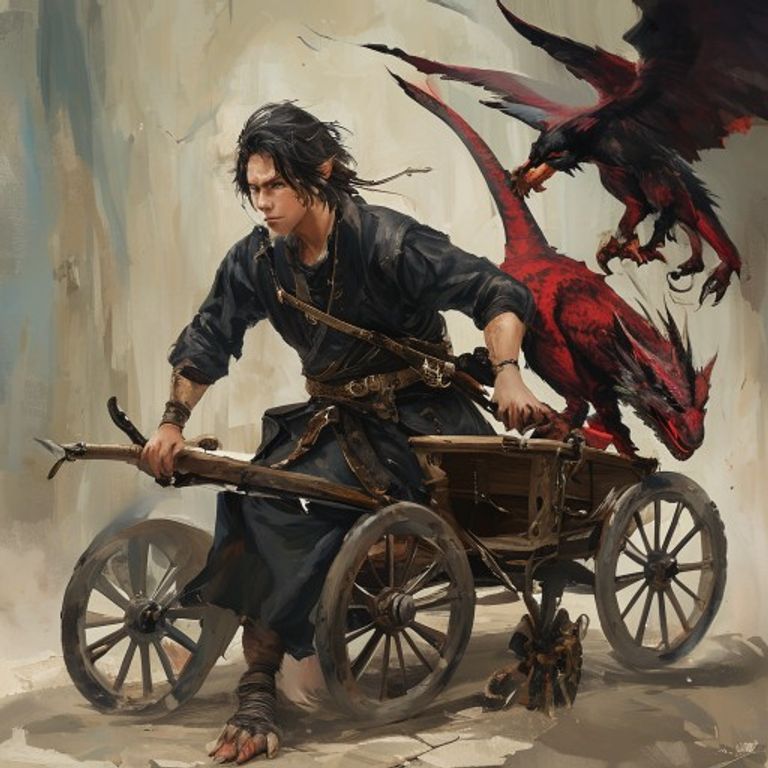
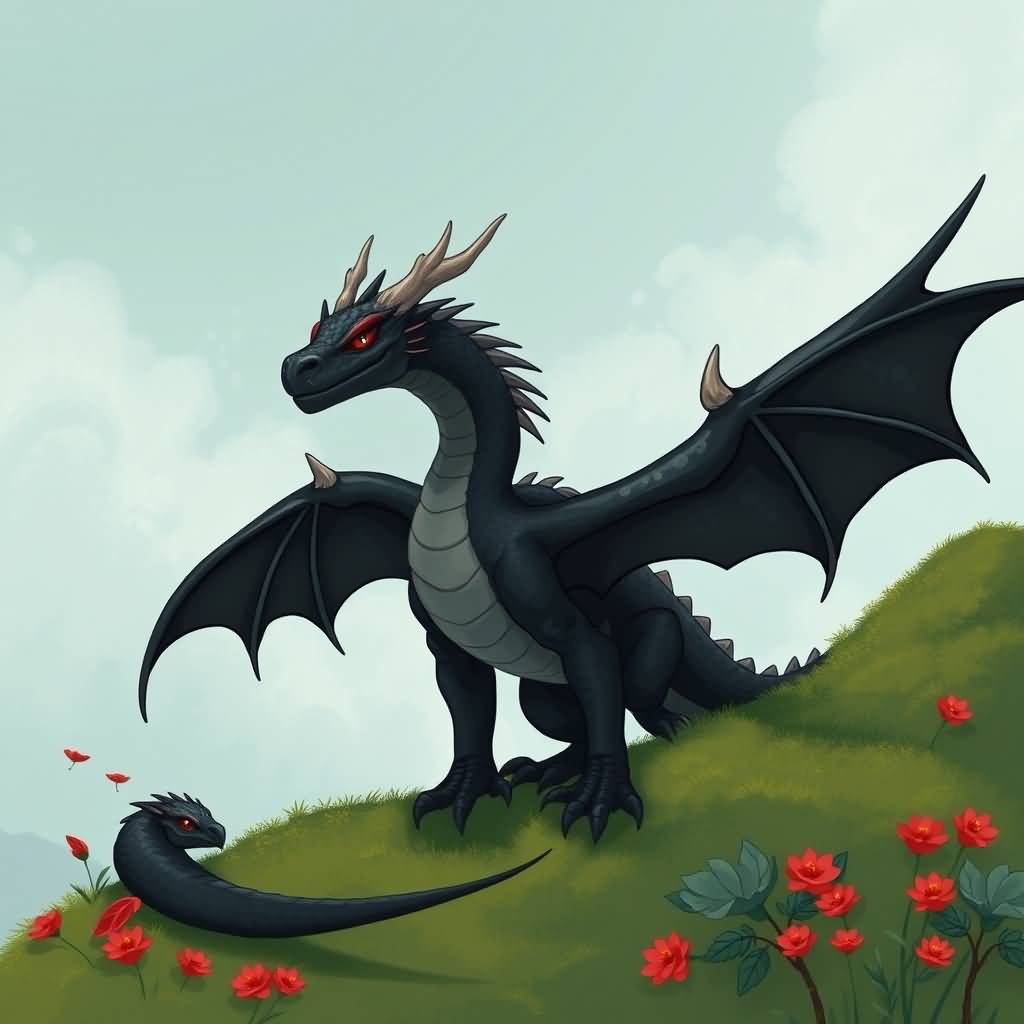
Chen Wen lived his entire life in a hospital bed, confined by an incurable congenital disease, only able to glimpse the outside world through television, books, and a window, longing to step outside but never able. His death came with the long beep of medical monitors. When consciousness returned, he found himself in total darkness; he pushed against a surface, heard a crack, and emerged from an egg into a valley with blue sky and white clouds. His body was now covered in black scales, with claws, a tail, and wings—he had become a dragon. Two other eggs lay nearby. A massive female dragon, his mother, landed and offered him raw meat, which he refused. Remembering human survival skills, he collected dry grass and dead wood to make fire by friction. The mother dragon, puzzled, breathed flame onto the pile, and Chen Wen quickly learned to exhale a small flame himself, astonishing her. She knew dragons relied on bloodline memory and brute strength, not active learning, and that their lack of creativity had led to defeats against humans. Over the following days, Chen Wen practiced gliding and flying, while his younger brother and sister hatched and immediately bared their teeth at him. He broke a small tree into a wooden stick and beat them into submission, establishing dominance. The mother watched uneasily as her son used tools and showed human-like behavior. Two months passed; the three young dragons grew to three meters tall, learned flight and dragon breath, and remained in the valley as ordered. When food demands rose, the mother spent more time hunting. One night she did not return. Chen Wen flew out after dark, following her aura, and found a trail of broken trees ending in a deep gully where his mother lay critically wounded, scales torn off, flesh and bone exposed. She ordered him to flee, but he refused. Using engineering knowledge from his past life, he carved a log into wheels, assembled planks with vines, and built a crude cart. With his unwilling siblings pulling together, they dragged the mother back to the valley by dawn. The mother, though proud, expressed gratitude—rare among dragons. The Red-feathered Hawks that had attacked her now drove away all prey around the valley, leaving no food. Chen Wen crept to a nearby human village at night, knocked out multiple sheep with his stick, and dragged them home. He left gold coins from his mother’s hoard in the hay as payment, a human habit that angered his mother, who deemed it shameful for a noble dragon, but she accepted the food. Chen Wen realized the hawks would soon attack again; his scales were too soft. He conceived of forging armor but found no iron ore. His mother told him to go to a cave on the northern mountain, saying everything inside was his. Chen Wen entered and discovered a mountain of gold, not iron. Disappointed, he continued stealing sheep while thinking of alternatives. Meanwhile, in the human village, the sheep owner A Guduo found the gold coins and kept them. Days later, a merchant named Tailin came to buy sheep but offered only half the usual price, claiming poor market conditions. He warned about the growing threat of Red-feathered Hawks and hinted prices could drop further. The village chief refused, and Tailin left with a smug chuckle. Chen Wen, unaware of this, focused on survival. His long-held dream to roam the world freely persisted, but his immediate goal was to protect his mother and siblings from the hawks. With his human ingenuity, he had already built tools, made fire, and devised a cart. Now he needed to find a way to craft defenses before the hawks launched a fatal assault. The conflict remained unresolved, and the young dragon with a human soul was their only hope.