Summary

... Read More

Early autumn morning in the harbor district of Dawn City on Southern Virland Island, an area rife with vice and poverty. Lucius, an Execution Mage from the Saint Virland Temple’s Moral Inspection Office, compels Captain Sidero of the city guard to lead him to a mysterious brothel hidden deep in the warehouse district. The brothel offers stunningly beautiful women at a fraction of the normal price, undercutting the local market and drawing complaints from other establishments. Lucius, suspecting illicit magic, observes the brothel’s steady flow of low-income sailors and dockworkers. After ordering Sidero to block the back exit, Lucius uses a Windwalk to approach, then casts Sleep on the hooded doorkeeper. He strides into the warehouse to find dozens of men enjoying themselves with exquisite women behind makeshift curtains. When Lucius orders everyone to stop and casts Purify on one of the girls, the woman transforms into a sheep. Shocked, he purifies each girl in turn, revealing that every single one is a transformed sheep. There is not a single human in the entire brothel, only sheep. Lucius meticulously examines the transformations and realizes they are flawless, executed with extreme precision and consistency. The casting style suggests a single mage performed all the Transfigurations, a feat requiring immense magical skill and deep knowledge of the female form. The mage is also adept at anti-tracking, destroying all magical traces. Lucius concludes that the perpetrator is a cunning, financially desperate, and extremely talented Transfiguration master, likely a formerly wealthy playboy who squandered his fortune and now resorts to depravity. The trail goes cold.

On the same morning, in the noble district of Dawn City, Rosen, the magic apprentice of High Mage Lady Agniet, sits in the drawing room of her Azure Estate, clutching a bag of 400 gold orgues. He has been Agniet’s apprentice for ten years, far longer than usual, and still owes a substantial tuition debt of 1854 gold orgues. He is the heir to a barony, but his father was recently killed by forest sprites. To inherit the title, he must first obtain a formal mage’s diploma. Rosen previously earned the money by a less than honorable method—operating the very brothel that Lucius is investigating. He has mastered the required spells and knowledge, and now he seeks his mentor’s signature on his graduation certificate. He is called to the study where Lady Agniet and her close friend Princess Serena are present. Rosen humbly demonstrates his spellcasting by casting Food Creation Magic, turning a piece of pine wood into a fragrant, delicious loaf of bread. Both women are impressed by the quality and precision of the magic. Agniet acknowledges his improvement and then raises the issue of his outstanding tuition. Rosen explains his father’s death and his need to inherit the barony. He offers the 400 gold orgues as the first payment and proposes to pay the rest over ten years at the market interest rate. Lady Agniet, though skeptical of his ability to raise the full sum, appreciates his diligence and trustworthiness. She extends the repayment period to twenty years and waives interest, requiring only 200 orgues annually. Princess Serena suggests even more leniency, but Agniet holds firm. Rosen is relieved; his illicit proceeds have secured his diploma and his path to becoming a baron.

The two narratives converge: Rosen is the elusive Transfiguration mage who transformed sheep into beautiful women to run the cheap brothel, earning the money to pay his tuition. His incredible magical talent, demonstrated in his flawless Food Creation and hidden Transfiguration work, contrasts with his mediocre academic record. He now must inherit the barony, manage his territory, and secretly continue his magical enterprises while evading the attention of Lucius and the Temple. The story sets the stage for Rosen’s double life, with Lucius’s investigation posing a lingering threat to his plans.

Associated Names

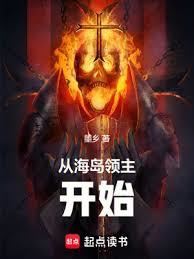
从海岛领主开始
Latest Release
DateGroupRelease
2026-05-29lightnovelasia c130
2026-05-29lightnovelasia c129
2026-05-29lightnovelasia c128
2026-05-29lightnovelasia c127
2026-05-29lightnovelasia c126
2026-05-29lightnovelasia c125
2026-05-29lightnovelasia c124
2026-05-29lightnovelasia c123
2026-05-29lightnovelasia c122
2026-05-29lightnovelasia c121
2026-05-29lightnovelasia c120
2026-05-29lightnovelasia c119

Community Reviews

Rating(4 / 5.0, 32votes)
5 stars
7(22%)
4 stars
16(50%)
3 stars
8(25%)
2 stars
0(0%)
1 stars
0(0%)

Popular reviewsMore Reviews»

... Read More
This series began with tremendous promise, captivating readers as the main character embraced his role as an "Island Lord." The narrative was fresh and engaging, brimming with potential for character development and intricate world-building. However, as the story progressed and the protagonist transitioned from merely being an island lord to a more powerful figure, the series unfortunately fell into the familiar trap of becoming just another generic power-leveling tale, replete with the predictable tropes that plague the genre. One of the most glaring issues is the treatment of supporting characters. Outside the protagonist, none of the secondary characters maintain their relevance once their arcs conclude. The romantic interests, who initially hold promise, fade into obscurity as the story continues. They are barely mentioned again, and it feels as if the author has sidelined them completely. This lack of depth for side characters drains the narrative of emotional resonance and makes it hard for readers to remain invested in their journeys. Moreover, the main character's journey lacks the sense of struggle and development that often enriches a story. He faces no significant setbacks, never contemplates a compromise, nor is he forced to evolve his strategies in the face of challenges. Each obstacle appears more like a minor speed bump, easily bypassed, and he consistently emerges unscathed and victorious. The absence of genuine conflict diminishes the stakes and the tension that ideally propel a story forward. The protagonist's government is another area that warrants criticism. While other characters grapple with various issues, the protagonist's governance remains a flawless entity, free from internal conflicts or challenges. This unilateral approach simplifies the narrative, reducing the complex dynamics typically seen in political or social governance to an unrealistic depiction devoid of any meaningful challenges. Perhaps the most disappointing aspect of the series is its tendency to backtrack on previously established promises. Early on, the narrative emphasized that personal magic should not elevate a person to godhood, insisting that growth requires intrinsic understanding and mastery. Yet, as the plot tallies up more power levels, these initial assertions feel hollow, as the characters seem to become increasingly god-like regardless of the foundations laid earlier. As the series progresses, it increasingly relies on repetitive plot structures, recycling the same methods to resolve conflicts. The once-thought-provoking ideas regarding civilization and humanity’s conduct, which the protagonist espoused in earlier chapters, are quickly discarded in favor of a simpler, more formulaic approach. The complexity that once enriched the narrative is replaced by a trend of diminishing returns, where the protagonist eventually achieves near-omnipotence, solving every problem without meaningful contributions from others. In conclusion, this series is a tremendous disappointment considering its initial potential. What started as a promising tale of an Island Lord has deteriorated into a repetitive, predictable saga devoid of depth or complexity. It serves as a reminder of how crucial it is for a narrative to maintain its integrity and keep its characters—both primary and secondary—meaningful throughout the journey.
... Read More
The biggest unanswered question for me is: Why sheep? Why not pigs or chickens? It feels like a thematic choice. Sheep are followers, docile, and "baa" a lot. Maybe the mage is mocking the customers for being mindless animals chasing pleasure. Or maybe it's just a funny animal. I’m leaning towards the mockery. It fits the "cunning" description.
... Read More
Overall, the opening is strong. It introduces two interesting worlds and a central mystery that connects them (the money). The writing is a bit purple at times with the descriptions, but the plot and characters are compelling. I’d definitely read the next chapter to see if Rosen really is the sheep mage.
... Read More
I did enjoy the detail of the "Food Creation Magic." Turning wood into bread is a classic, but making it smell like pine nuts is a nice touch. It shows that even low-level spells can be improved with skill. It’s a small bit of satisfying magic.
... Read More
The contrast between the two main characters is the best part. Lucius is all action and direct force. Rosen is all patience and manipulation. Lucius hunts a monster in the streets. Rosen is a poor student in a castle. It sets up a potential conflict where they might clash.
... Read More
Lucius’s complete failure in investigation was refreshing. Usually, the hero finds the clue eventually. But here, he is just completely outclassed. He has no leads. He is forced to admit defeat. It’s a great way to build up the villain’s mystique without them having to show up.
See all reviews

Characters

See all characters

Custom lists

See all custom Lists