Summary

... Read More
In the 38th year of Nanwu, a three-year famine leaves the land barren and the people desperate. Starvation drives the villagers to extreme measures, including cannibalism and the trading of children for food. In Hutuoya Village, seventeen-year-old Han Luoxue, eldest daughter of Han Mingyuan, the crippled third son of the Old Han family, becomes a target. Her grandmother, Old Madam Han, plots to sell her to Liu the Butcher, a man known for torturing and killing women, in exchange for grain. Han Luoxue overhears the plan and attempts to escape, but is knocked unconscious. When she awakens, she receives the memories of the original owner, which reveal a horrific future: she will be sold, tortured to death, and her younger sister will follow. Their father will be beaten to death when he confronts the family, their mother will faint from shock, and both will be eaten by their own relatives. Their baby brother, less than a year old, will be roasted and consumed by their fourth uncle. Han Luoxue knows she must act immediately. She pretends to remain unconscious until her grandmother leaves to fetch her fourth uncle to carry her to the market. Once alone, she slips out and goes to the cowshed where her family lives. She urgently tells her father the truth. Her father, Han Mingyuan, once a skilled hunter but now paralyzed after being pushed by his ungrateful fourth brother during a wolf attack, believes her. He gives her a wolf tooth token, a keepsake from a life he once saved, and instructs her to crawl through a dog hole to seek help from Village Head Han Qiang. Han Luoxue wraps her head in a rag to avoid recognition and runs to Han Qiang. She explains her family’s situation and pleads for a family division. Han Qiang agrees to help, recalling the life debt he owes to Han Mingyuan. He arrives at the Old Han’s property just as Old Madam Han returns with the fourth son. Han Qiang announces the need to separate Han Mingyuan’s family. The Old Han family resists, but during the confrontation, Han Mingyuan’s young nephew blurts out that they plan to sell his sisters for meat. The truth is exposed, and the surrounding villagers are horrified. With public pressure and Han Qiang’s authority, the family is forced to agree to the division. There is no property to divide, and the family is destitute. Han Qiang arranges for them to move into a vacant haunted courtyard in the village, with the condition that they pay one hundred catties of coarse grain within a year to own it. The rest of the Old Han family signs the separation document, officially severing ties. Han Qiang personally carries Han Mingyuan to the new dwelling and gives them two catties of corn from his own meager stores. Han Mingyuan entrusts the grain and the separation document to Han Luoxue, recognizing her newfound decisiveness. As Han Luoxue takes the items, she discovers a hidden space within her consciousness called Nuwa’s Tear. It contains a small spring and a patch of dark soil about a square meter in size. She tests the space by storing the grain and the document, and information about the corn’s quality and planting methods floods her mind. Using mental command, she sows the corn evenly in the soil and waters it from the spring, but the effort leaves her dizzy and weak. She kneels on the ground, resting, but the seed of hope is planted. The story begins with Han Luoxue awakening from a near-death experience to face a family that would consume her own flesh and blood. With her father disabled, her mother frail, her younger sister lame from a snakebite, and her baby brother starving, she is thrust into the role of protector. Through her courage and the intervention of a grateful village head, she secures their separation from the cruel family. The acquisition of the space gives her a potential means to survive the famine, but the immediate challenges of hunger, lack of resources, and the ever-present threat from the Old Han family remain. Her journey is just beginning as she takes the first steps to carve out a new life in a world where every grain is a lifeline and family bonds are tested by the will to live. The final scene shows her planting the corn, a small act that represents her resolve to overcome the odds and build a future for her family.

Associated Names

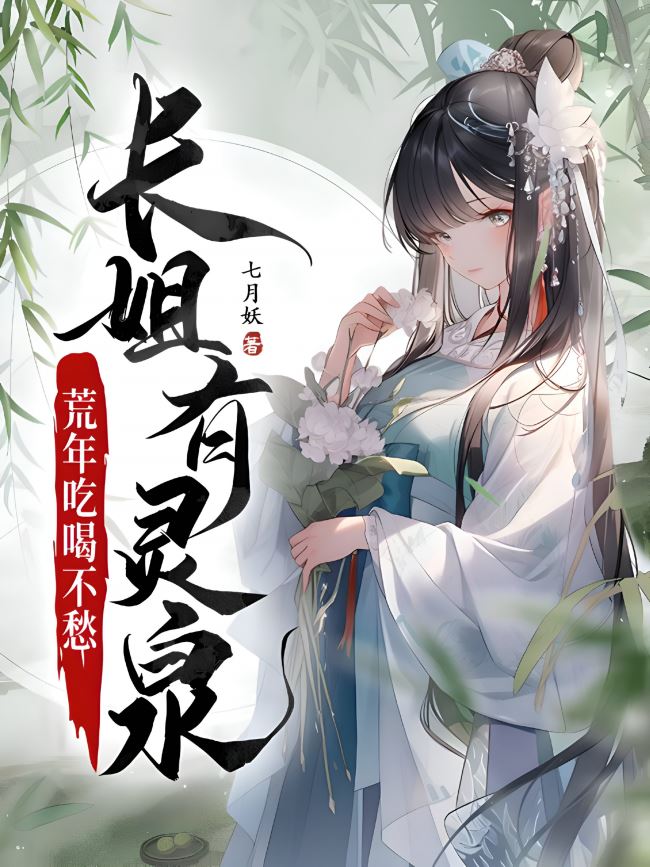
长姐有灵泉,荒年吃喝不愁
Latest Release
DateGroupRelease
2026-05-29lightnovelasia c400
2026-05-29lightnovelasia c399
2026-05-29lightnovelasia c398
2026-05-29lightnovelasia c397
2026-05-29lightnovelasia c396
2026-05-29lightnovelasia c395
2026-05-29lightnovelasia c394
2026-05-29lightnovelasia c393
2026-05-29lightnovelasia c392
2026-05-29lightnovelasia c391
2026-05-29lightnovelasia c390
2026-05-29lightnovelasia c389

Community Reviews

Rating(3.7 / 5.0, 32votes)
5 stars
8(25%)
4 stars
7(22%)
3 stars
16(50%)
2 stars
0(0%)
1 stars
0(0%)

Popular reviews

... Read More
The title of this novel initially piqued my interest, and it was the glowing reviews that truly drew me in further. As an avid reader with a penchant for stories that delve into challenging situations—whether it's natural disasters, apocalyptic scenarios, or the gritty realities of life in the '70s—I have encountered a diverse array of female lead characters in this genre. In my humble opinion, labeling the female lead (FL) as a villain seems like an overstatement. While it's true that the FL isn't exactly portrayed as a saint and participates in actions that might be deemed questionable, branding her outright as a villain feels somewhat misplaced. The narrative clearly delineates the repercussions of her actions, allowing for a nuanced understanding of the character's moral complexity. Throughout the story, each character faces the consequences of their choices, and it’s evident that retribution and punishment come into play in a way that feels both justified and compelling. Regarding the FL's family dynamics, it’s evident that they play a significant role in shaping her character and motivations. The complexity of her relationships adds depth to the storyline and fuels many of her decisions. As we delve deeper into the narrative, it becomes clear that the influence of her family is a driving force in many of her actions, creating a rich tapestry that adds layers to her struggle for survival and identity in the face of adversity. I look forward to exploring these themes further as the story progresses. The depth of characterization and the intricate interplay of familial ties within the plot promise an engaging experience that resonates well with fans of the genre.

... Read More
Overall tone of the excerpt is dark and urgent. The prose doesn't waste time on beautiful descriptions. It focuses on sensory details that create a sense of hunger and desperation. The lack of fire in the kitchen, the sticky blood on the back of the head, the baby's weak cry like a kitten. The author uses simple language to evoke strong emotions. I felt cold reading about the cowshed. I felt angry when the grandmother talked about selling. I felt relieved when the village head showed up. That's effective writing for the genre. Not every novel needs poetic prose. This one gets the job done through visceral impact. I'm interested in continuing to see how the family adapts.
... Read More
One thing I noticed: the father gave the two catties of corn to Han Luoxue without much resistance. In a famine, handing over grain is a huge trust, especially when she's just a child. But he already saw her intelligence in arranging the village head and the house. He's also disabled and unable to work, so he has to rely on her anyway. That's a realistic power shift. The grain is defined as "poor quality" corn, which fits the famine times. Even bad corn is precious. I'm hoping the space can improve the quality over time through cultivation. The author mentioned the space was formed by Nuwa's Tear, which might have restorative properties. That could be a way to grow better crops. But for now, it's just survival.
... Read More
The final scenes of Han Luoxue testing the space with the corn were a bit anticlimactic after the high drama of the family division. But I get that the author needed to establish the mechanics. The corn seed information appearing like a game tooltip felt too modern for the setting, but it's a common trope. I was more interested in the detail that the space has a "small puddle" and "dark soil" and that planting uses mental energy. The dizziness is a good limit. She also considered the lack of firewood in the real world, showing she's not completely dependent on the space. She still has to deal with mundane survival like boiling soup. That balancing act is key for a survival story. I'm cautiously optimistic about the direction.
... Read More
The fight about the old courtyard being "haunted" was a small world-building detail I liked. The village head offered it for 200 catties of grain, but the protagonist bargained down to 100 and a year to pay. The fact that many people died there from suffocation, and no one else wanted it because of superstition, shows the cultural blend of pragmatism and fear. The Han family are willing to risk ghosts because they think real human evil is worse. That's a resonant theme. Also, the village head saying he'll distribute the grain he collects shows he's trying to keep the community somewhat fair. But I suspect those 100 catties of grain will be hard to come by. The space might help, but she'll need to sell something. The courtyard could become a base for a grind or a farm later.
... Read More
The author's use of "protagonist's memories of the original owner's fate as a warning" is a common web novel trope, but it's executed effectively here. Instead of having the protagonist guess about the future, she receives explicit visions of her sister being eaten, father beaten to death, mother fainting, and baby brother roasted. It removes any doubt for her. She knows exactly what will happen if she doesn't act. This urgency drives the early conflict. Without those memories, she might have hesitated or not believed her grandmother would go that far. The memories also add tragic irony because the reader can see how close the family was to that dark future. The protagonist now has to fight against a predetermined tragedy.
See all reviews

Characters

See all characters

Custom lists

See all custom Lists